
Recommendations for first and second-year Euroculturers starting a new chapter.
By: Karen Natalia Yepes
Summer is about to start, and for Euroculturers, that means transition times. Some people have finished or are finalising their theses. Others are preparing for their IP and have either secured an internship or research stay, or are in the race to decide which direction to follow. And other future Eurocultures are preparing to join the programme, with all the arrangements this implies. Indeed, it is a time of change, which can always be challenging at every step.
At this point, a lot of reflections arise. Personally, I have been looking back and thinking about those opportunities and tips that I would have liked to have known earlier in the programme. Therefore, the article covers those prospects and summarises some openings to bear in mind.
Starting your second year
At this point, some might still be searching for an internship or deciding whether to take the research track. Perhaps others have already found or selected their placement, but have not found accommodation or are dealing with other issues. Along this line, the first note is: there is still time. It is common to secure internships in July or even August (but of course, keep being proactive with your applications).
In case you are still looking for an internship, look at the Euroculture Placement Catalogue, a student-led initiative designed to support current and future Euroculture students in identifying placement opportunities, consolidated by our student and alumni community. Here, you can filter placements by place, target population, compensation, and other attributes that align with your interests. Besides, you can access contact details of (former) students. Please note that the catalogue also includes opportunities that have not yet been taken up by Euroculture students. In case you already got something, and you want to add your placement to the list, feel free to contribute.
In case you are interested in the research track, refer to the Euroculture Mentorship Guide, an interactive source for finding information about Study Tips, Accommodation, Leisure, and Transportation. Note that it focuses on the student life at universities across the Consortium.
Presenting and publishing your work
Every semester, there is some written work that you have to complete. Either an essay, an opinion piece, a policy paper, or so on. An additional motivation for completing these assignments is the possibility of publishing them. For this, the Euroculturer is the ideal platform for sharing your work and learning about what your peers have done. Soon, the call for new members to join the magazine will start, so keep up to date to see when the applications open. The best way to do so is by subscribing to The Euroculturer’s newsletter.
In case you want to go for an academic journal, my advice is to do a ‘boolean search’ on LinkedIn, including the terms “call for submissions” AND/OR “call for abstracts” (include the quotation marks and the connector), plus any keyword that relates to your work. This will help you find opportunities that align with your research topics and even guide you to present your work at conferences.
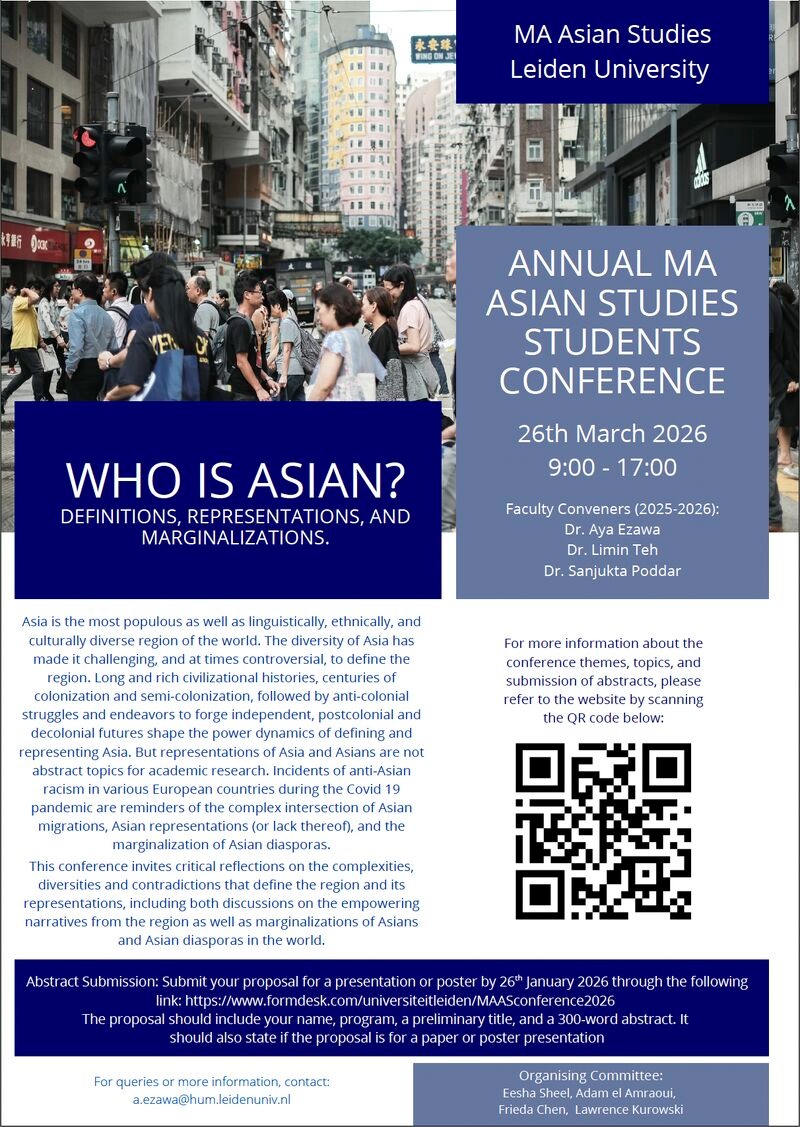
Example of an actual call for submissions by the University of Leiden in 2026. More information on the programme can be found here. Source: University of Leiden.
Joining associations and participating in extracurricular courses and events
In essence, the programme offers constant mobility that allows you to engage with different academic cultures through lectures, but there are indeed extracurricular opportunities that are worth checking out. For example, you can check student associations that align with your interests. They differ per university, and there is no catalogue to refer you to (yet). However, I can give you some recommendations based on my personal experience.
For reference, I was in Groningen (first semester), Bilbao (second semester), and Göttingen (third semester in the research track), and across every university I was able to join academic events of interest. In Groningen, I attended a couple of public lectures organised by SIB-Groningen related to International Relations topics. They are usually on Tuesday nights, and you do not have to be a member to attend most of them. Also, through Studium Generale Groningen (which is not an association, but a university programme that organises lectures, films, debates, and more) I was able to attend a conference featuring Kwame Anthony Appiah, a philosopher whose work was part of our lectures’ content at that time. This event was also completely free and only required registration.
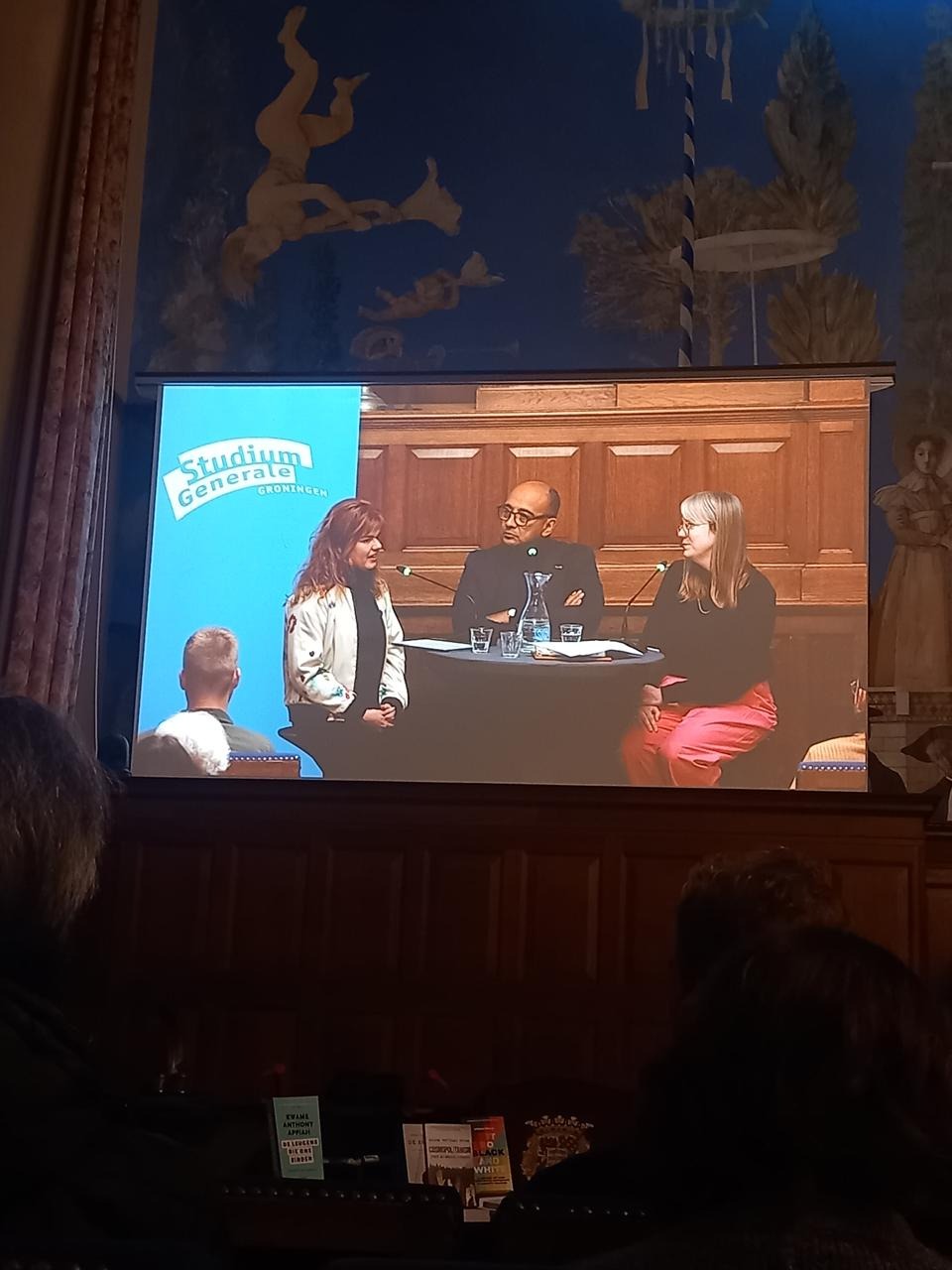
Photo of the conference of Studium Generale featuring Kwame Anthony Appiah. Source: Karen Natalia Yepes.
Unfortunately, an opportunity that I missed was joining ENLIGHT, a European University alliance that includes the University of Groningen, Uppsala, and Göttingen. They organise courses and events for learners, teachers, and researchers, in which you can take part too. Keep an eye on their Student Network Conferences and other events that you could attend in person, and even get financially covered for, as a member.
On the bright side, I did have the opportunity to join STUBE-Niedersachsen in Göttingen, the supplementary study programme for students from Africa, Asia, Latin America, and Eastern Europe. This is a hidden gem for ‘Global South’ students. They organise and can even fund research stays for projects related to the above-mentioned regions. In my case, I participated in a weekend seminar on “The Future of International Relations”. It included the participation of organisations like Erlassjahr.de (NGO in favour of Debt Relief) and the United Nations Association of Germany, with very enriching conversations about political and economic trends. The seminar was held in Goslar and was fully covered in terms of accommodation and meals. This year they are having a weekend seminar in Goslar again, now focused on “Project Management for Social Entrepreneurship and Sustainable Development” from November 13 to 15. Registrations are open in case you are interested, but note that spots tend to be limited. My advice: apply in advance. Besides, it is a great opportunity to connect with other students from different universities and fields.
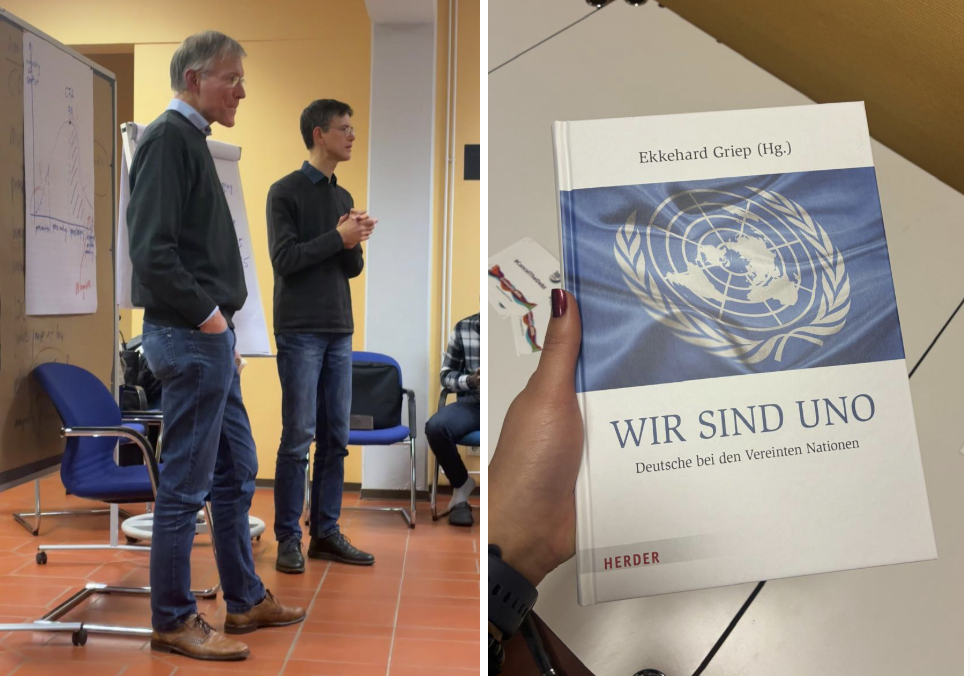
At the left, Dr. Ekkehard Griep, former German Diplomat at the UN Department of Peacekeeping Operations in New York, currently Chairman of the Board of Directors at the United Nations Association of Germany, is leading a seminar about Multilateral Diplomacy at the United Nations. At the right, Andreas Kurschat, STUBE-Niedersachsen coordinator. The book is a reference to Dr. Griep’s work. Source: Karen Natalia Yepes.
Last but not least, pay attention to the opportunities shared by the Euroculture Secretariat. In our cohort, we had the chance to engage with multiple units of the EU Immersive programme coordinated by EDIW. Those units were held both online and on-site in Brussels, Prague, and soon they will be closing in Madrid. I participated in Unit 3 in Prague, and this was a great opportunity to engage with topics related to the future of Europe, youth participation, governance, and much more. Initially, I thought I could not participate, but non-EU students were welcomed and encouraged to join as well. Most likely, a similar opportunity or project may be shared during your studies, so my advice is to be proactive and ask about participation requirements in advance.
Overall, subscribing to the newsletters of the associations and organisations you are interested in is the best way to stay informed about the opportunities arising.
Applying for summer courses and other opportunities
Finally, prepare for the summer. This might be an obvious point for most people, but for Euroculturers like me who come from cultures that do not share the ‘summer’ concept, this was something that I did not anticipate. There is a break of two to four months, depending on your next placement, and I advise you to find opportunities during this period, especially if you are staying in Europe.
First, note that your resident permit may allow you to participate in the European Peace Corps. The requirements state that you have to be between 18 and 30 years old and reside in one of the EU countries and other countries covered. Volunteering activities can last between 2 weeks and 2 months, and are known to be great opportunities to engage in projects, meet new people, and learn from the practice. In case you are interested, check your eligibility and register here.
Alternatively, check summer courses coming up. For instance, the European Student Think Tank (EST) has an open call for the EST Academy 2026 that will be held online starting from early July. This year’s topic is: “Multipolar World Order: Policy, Power and Public Communication” and the deadline to apply is June 26th, 2026, 23:59 CEST. You can learn more about their call and the application process here.
In sum, I hope this article reaches those Euroculturers looking for motivation and alternative engaging opportunities to add to your experience during the programme. Best wishes and good luck!
Header source: EU Immersive. Photo of the EU Immersive Programme Unit 3 in Prague, Czechia.
 The Euroculturer