
by Joshua Losinger
Since fall 2024, North Korean troops have been reported fighting in Russia and in Ukraine, signifying both a deepening in Moscow-Pyongyang relationships and a further step in the internationalization of the conflict. The implications of North Korea’s direct participation in the war are far greater than a symbol of the two countries’ friendship. The events leading to and stemming from the sending of troops are multiple and interconnected: from the signature of a mutual defense treaty last June, to Ukraine’s offensive in the Russian region of Kursk in August, to the undetermined fate of North Korean prisoners of war (POWs) currently in Ukraine, the voluntary actions of Pyongyang and Moscow bring us back to a pre-World War II international order and disregard the law of armed conflict. Many consequences of the North Korean participation in the Russian invasion of Ukraine are tied to breaches of international law, but the human repercussions are just as alarming. As we discover through the testimonies of the very few survivors of the North Korean troops found thousands of kilometers away from their country, the dignity of these soldiers, their unlawful transport and presence, as well as the fate of those captured should be part of the debate.
Facts and Timeline: Russia-Ukraine war and origins of North Korea’s involvement
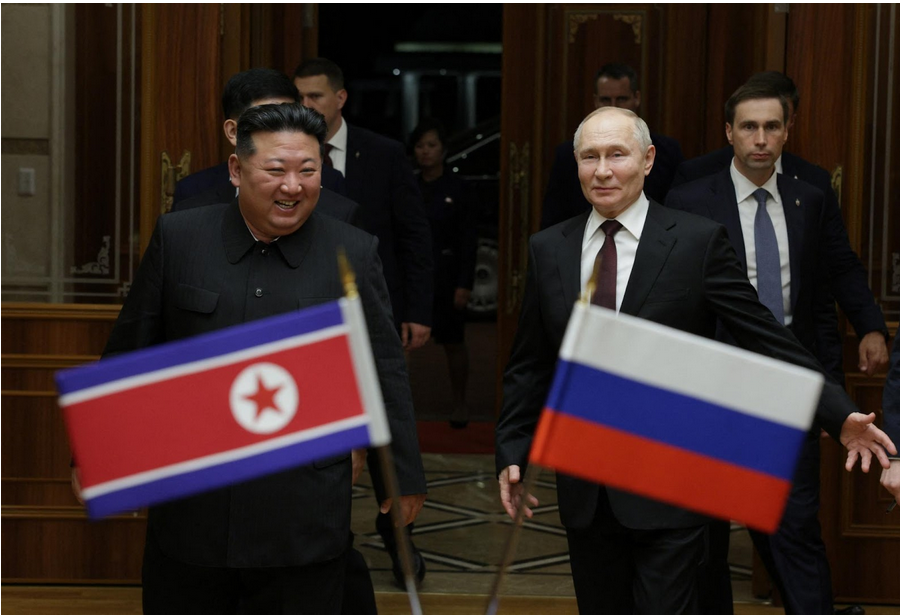
On June 19, 2024, leaders of Russia and North Korea, two close allies already, met in North Korea’s capital Pyongyang to sign their “Comprehensive Strategic Partnership Treaty”, which came into force in December 2024. The Korean Central News Agency, North Korea’s governmental news outlet, stated the agreement will be a “driving force” in a “multi-polarized world order without domination, subjugation and hegemony”. It includes a mutual defense clause in case either one faces aggression, reminding pillar article 5 of the NATO treaty. Only here, the Russian-North Korean treaty turned out to come in handy in the context of Russia’s own crime of aggression against Ukraine.
In August 2024, Ukraine’s forces launched an offensive on the Kursk region, marking the greatest counterattack on Russia since the beginning of the war, two and half years prior, but also the first attack on Russian territory since the Barbarossa operation led by Nazi Germany in the summer 1941. While boosting Ukrainian morale when Kyiv controlled some 1300 km2 of Russian territory, the mission rapidly turned into one of stabilization. The gained territory was to serve as a bargaining chip in future potential cease-fire negotiations with Russia. However, as Ukraine challenged the power balance, North Korean presence was reported on the battlefield.
In November 2024, news outlets in South Korea started relaying the information: North Korean troops were fighting in Russia against Ukrainian soldiers. According to the media, over 8,000 North Korean soldiers had been sent to help Russia regain control over the Kursk region. From November to February, the overall number grew to 12,000, while suffering 4,000 casualties, two-thirds of whom ending up dead, according to Ukrainian President Volodymyr Zelensky. Around that time, Ukraine’s military intelligence claimed the number of North Korean soldiers had seemingly decreased, which coincided with the recent retreat of Ukrainian forces from the Kursk Oblast. As of late March 2025, amidst back-and-forth negotiations between the relevant parties and the US, Ukrainian troops had withdrawn from most of the Kursk region. Therefore, it is believable that the presence of North Korean military troops was likely related to the role of Kursk in Ukraine’s counteroffensive against Russia. However, Pyongyang’s involvement in Russia’s war on Ukraine is not limited to sending military personnel in what is advertised as a “defense” mission, just as much as it did not stop after Kursk was retrieved by Moscow. For example, on February 28, the Kyiv Independent reported on strategic cruise missiles tests launched in North Korea at the end of the same month. Taking us back to the Russian-North Korean pact, these again were made possible with Russia’s help through technological assistance in North Korea’s nuclear program, which likely constitutes a breach of the Treaty on the Non-Proliferation of Nuclear Weapons (NPT).
Official discourse and secret action: between inconsistency and hypocrisy
A trend in Russia’s avoidance of international backlash is to not acknowledge or even deny its unlawful actions, even when confronted with tangible proof. Not only is this inconsistent with international organizations’ reports and media coverage, but it is also a blatant sign of hypocrisy when considering previous statements made by both Russian and North Korean officials. Six months prior to the Kursk offensive, during his annual address to the Federal Assembly in February 2024, Russian President Vladimir Putin threatened the West with nuclear retaliation if they engaged in the war by sending their own military troops into Ukraine. This took place in the context of French President Emmanuel Macron’s words on February 26, when he emphasized how there was no consensus on whether to send troops on the ground, referring to Ukraine. Although there indeed was no consensus, neither the US, the EU, nor NATO had or have today sent their troops to the Ukrainian battlefield, and Macron’s words remained in the context of general military aid and the renewed support Europe would keep bringing to Ukraine in its fight against Russia’s aggression.
As reported by NATO Secretary-General Mark Rutte at a press conference in Brussels in late October 2024, North Korean troops were indeed fighting in the Kursk region. Earlier that month, South Korea’s defense minister Kim Yong-hyun had already reported that it was “highly likely” that North Korean soldiers had been killed in the Donetsk region as early as October 3. However, as of today, neither Moscow nor Pyongyang have acknowledged the sending of these troops – they even denied the various reports. Worse, on North Korea’s side, leader Kim Jong-un accused the US and Europe in November of prolonging the war by sustaining military assistance to Ukraine, meanwhile, its government had already started directly interfering with the conflict by sending thousands of North Korean soldiers to fight in Ukraine.
International implications and human rights concerns:
The implications of Russia and North Korea’s actions regarding international law are plentiful. To point a few:
- Having sent North Korean troops to fight in Ukraine violates Article 2(4) of the United Nations Charter, which prohibits the use of force against the territorial integrity or political independence of any state;
- North Korea’s breach of this article constitutes an act of aggression that violates Ukraine’s sovereignty and aligns with Russia’s own three-year-long act of aggression;
- North Korea’s actions also violate the UN Security Council Resolutions (Resolutions 1718 and 2397), which impose strict military sanctions on North Korea that ban it from exporting arms or military personnel;
- and, of course, possible violations of the Geneva Conventions on armed conflicts should also be considered in case these soldiers participate in war crimes or target civilians.
Now, if we look beyond the macro implications of the presence of North Korean military forces in Ukraine, we can start considering the individual dimension of the issue and its relation to human rights issues.
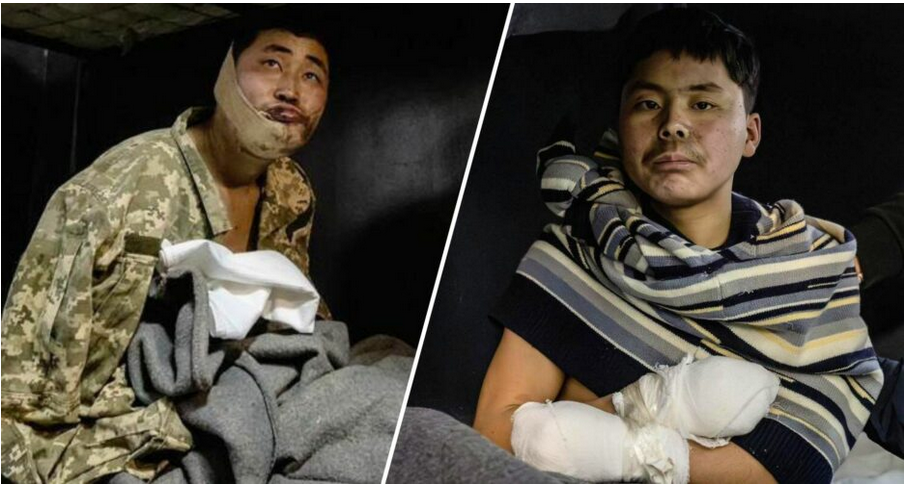
Evidently, the capture of two North Korean soldiers by Ukrainian forces in January 2025 gave a glimpse into that matter. A short video released by Ukraine’s government shows the POWs and highlights their experience on the front. Reportedly born in 1999 and 2005, these soldiers were mostly unprepared for modern warfare and used as cannon fodder by Russia rather than actual military personnel. When asked if they knew they were fighting in Ukraine, one of the soldiers shook his head. According to him, they did not even know who they were fighting against, as they were transported unknowingly to Ukraine.
South Korean Intelligence also reported that North Korean soldiers were instructed to kill themselves if captured – sealing any possible identification or incriminating evidence for Russia or North Korea. This was backed by US White House National Security Council spokesperson John Kirby, adding that these soldiers also feared repercussions on their families back home. Former North Korean military defector Pak Yusung backed this analysis, stating that “If the soldiers are captured and tell information to the enemy, their families will be punished, go to a political prison camp, or worse, they will be executed in front of the people”. Additionally, not only do Moscow and Pyongyang threaten the life of these soldiers and their families, but they also try to conceal any involvement of North Korea in the war: even if captured dead, the soldiers are given fake Russian military identification documents. One of the two captured soldiers was attributed the identification document issued to someone living in the region of Tuva, Siberia. All this evidence of secrecy from North Korea and Russia aligns with the mix of denial and refusal both countries have exhibited when confronted with accusations from the international community.
What will happen?
Today, the fate of these two prisoners of war and of future potential others is uncertain. In early February, talks were opened between Ukraine and South Korea about the possible transfer of these prisoners to third countries, as reported by Ukrainian Ambassador to Seoul Dmytro Ponomarenko. Once they are done receiving medical treatment in Ukraine, these POWs will likely be faced with deportation. The question remains: where to? Considering the likely threat to their lives if sent back to North Korea’s authoritarian regime, other leads are being considered, but according to the Geneva Conventions, the choice remains theirs.
On March 17, a potential transfer of the two soldiers to South Korea was discussed between Seoul and Kyiv’s foreign ministers. This option has been put on the table due to South Korea’s Constitution: according to the text, these soldiers are considered South Korean citizens. If the two soldiers express their intent to defect from North Korea, their transfer might go forward. But this decision, faced by most North Korean defectors, holds immense repercussions on their families back home, ranging from forced relocation to imprisonment and forced labor.
Image source: Generated by Adobe Express (header)

