
by Ibibia Frederick Joseph-George
“So did we overcome the borders in Brussels? I’m not sure.”
Organising and participating in the Euroculture excursion to Brussels from 7th to 9th April, 2025, part of the Eurocompetence II project management implementation section of the course, felt like a double encounter. I was both an insider and an outsider. I was both behind the curtain and on the stage, choreographing an experience I was also trying to interpret. As a coordinator, I helped plan the trip with Danielle, Maria, and Riccardo. But as an African, a migrant, and a foreigner, Brussels meant something different. Beneath the logistics, handbooks, and meeting itineraries, I wanted to understand what borders, real and imagined, look like in a city that claims to be the heart of Europe.
While our primary goal was to complete our Eurocompetence II requirement, we decided early on to tie the trip into the IP theme: Overcoming Borders in Europe and Beyond. The result? A rich and chaotic potluck of learning, frustration, curiosity, community, and the kind of laughter that makes your chest ache. (And yes, for the record, there were at least 16 planning meetings. I could bore you with the behind-the-scenes madness, but perhaps that’s for another spicy article. Or a memoir.)
Instead, let me walk you through the experience. Not as a coordinator. But as someone who lived it, body and mind, awkward limbs and all.
From Groningen to Brussels: The Borderless Commute (7th April)
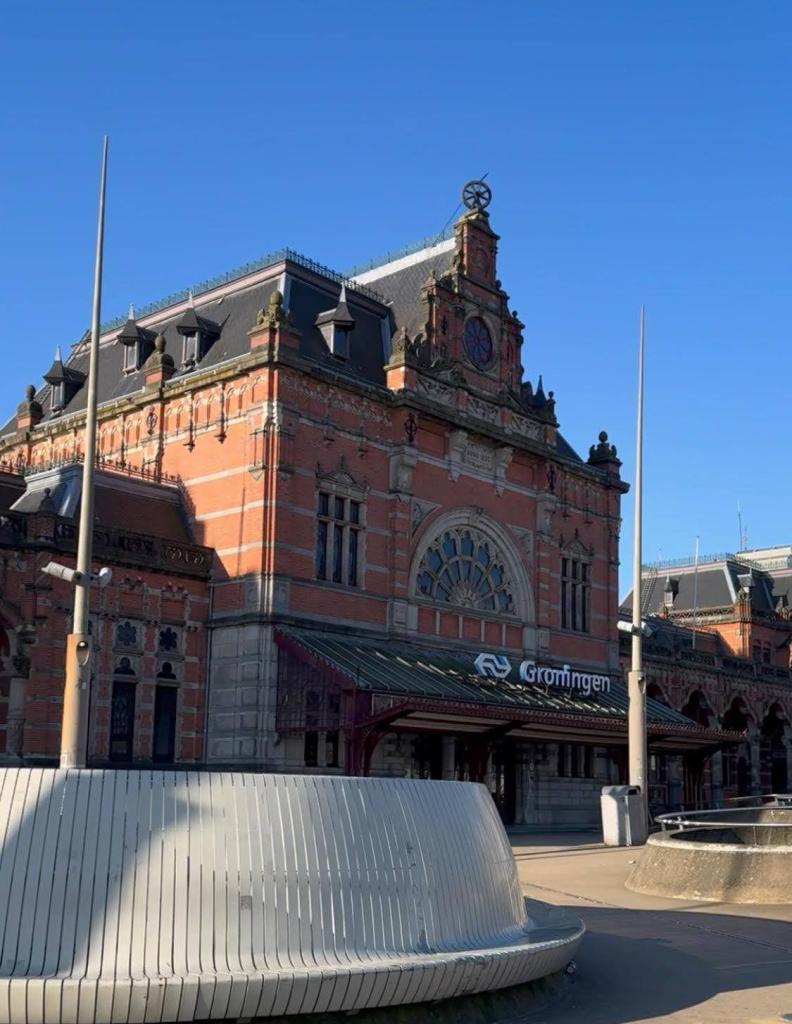
It was early. I mean really early. The kind of cold where your breath feels like a betrayal. Around 6°C. I shuffled out of my student flat in Groningen Nord, early as usual, not!!! I raced toward the bus stop. I almost missed it, but grace (bless my Ijaw goddess-woyengi) or inertia pulled me through.
Surprisingly, when I got to the Groningen Hoofdstation (main station), nearly everyone was already there. Euroculture students being on time? Historic! Danielle had a cold and was masked up. Maria and Riccardo looked calm but calculating, the face of responsible adults trying not to lose 12 students across borders.
We boarded the iconic yellow Dutch double-decker train.
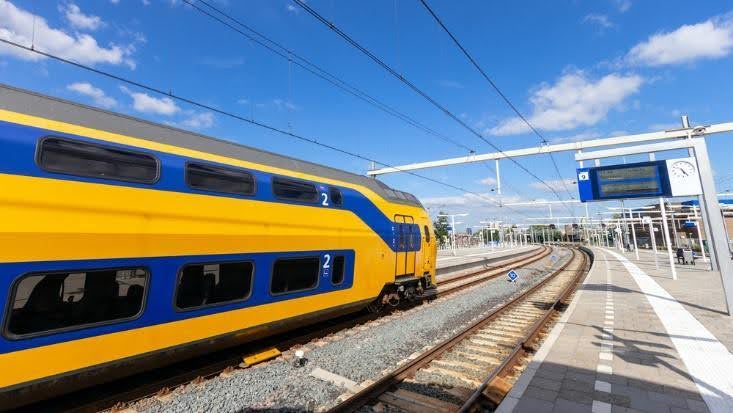
Route: Groningen → Zwolle → Breda → Brussels.
Mood: cautiously optimistic.
Weather: textbook Dutch.
Energy: teetering between caffeine buzz and existential dread.
We switched at Zwolle. Sprinted through the station like a migrating flock of academic birds. Laughed, ran, forgot things (shhh), found them again. Made it to Brussels.

We took our first breaths, quick glances, aural inputs… And were greeted not by the grandeur of an EU capital, but by the stench of piss and the ballet of pickpockets. Welcome. Brussels whispered, in French and Flemish?
BRXXL 5 and the House of European History
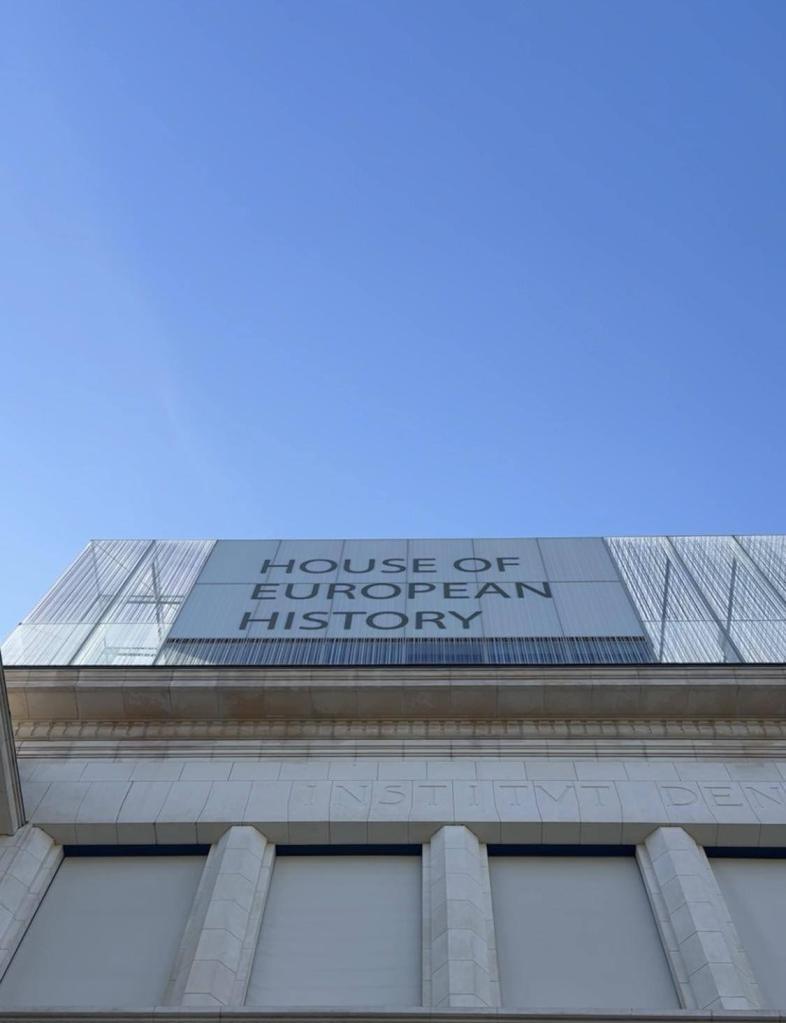
Maria and I took up security duty (stereotype in action but anyway, I digress). Danielle and Elly led the navigation efforts. Riccardo sat in the middle, as a communication link between the rear and the front. We arrived at BRXXL 5 hostel, an iconic low-cost hostel with a funky name, functional shared rooms, slightly chaotic lift and after a quick shower and a moment to remember who we were, we headed to our first official stop: the House of European History.
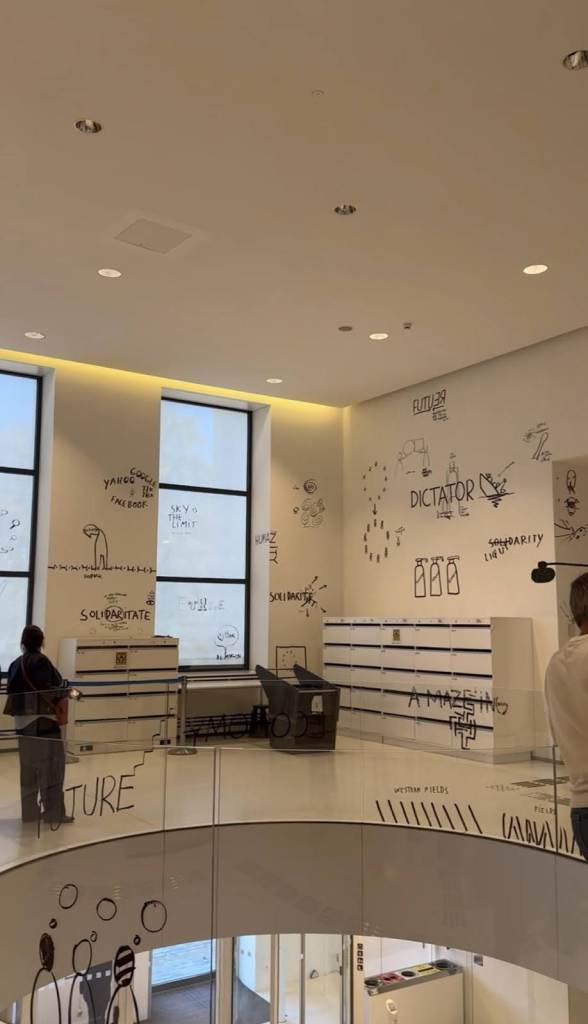
How I remembered it? The museum is a beautiful, confusing, layered space. Designed to tell the story of Europe, I would argue a tad bit Eurocentrically: the usual tales of trauma, unity, erasure, borders, bureaucracy etc. Our time there was short. It became a kind of curated speed-run through centuries of conflict and confusion. And by confusion it felt like we also got confused due to the whole rush.

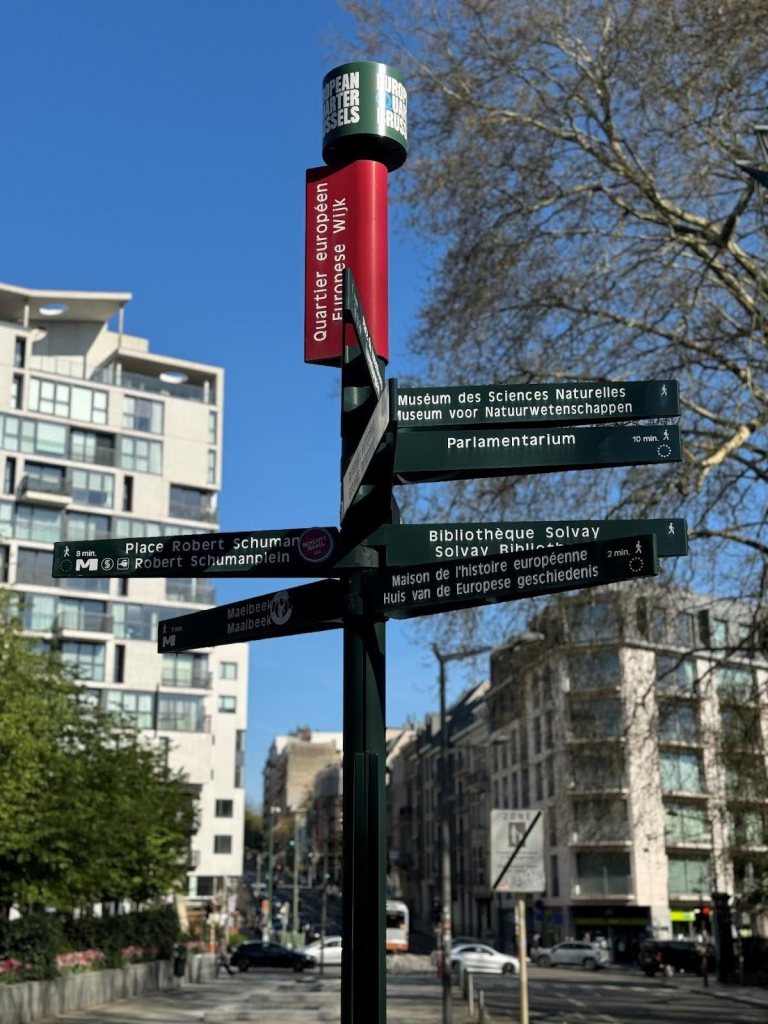
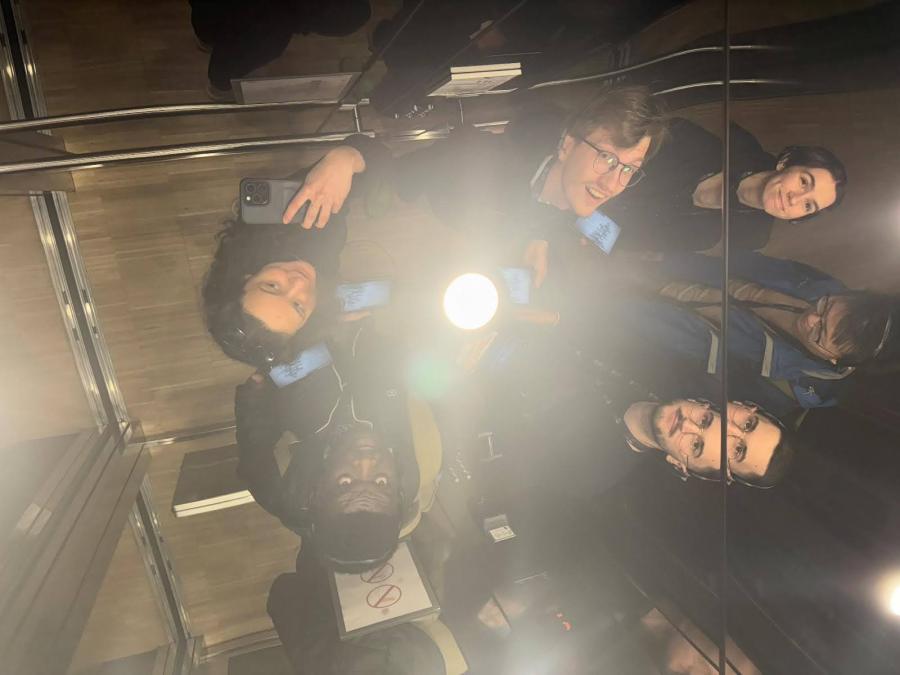
Scavenger Hunt + Pizza Wahala
After the museum, we launched into a city-centre scavenger hunt. For us organisers, this meant slipping away to buy prizes for winners, grab snacks, and pretend we were not still mentally rehearsing every second of the itinerary. Oh the horror!
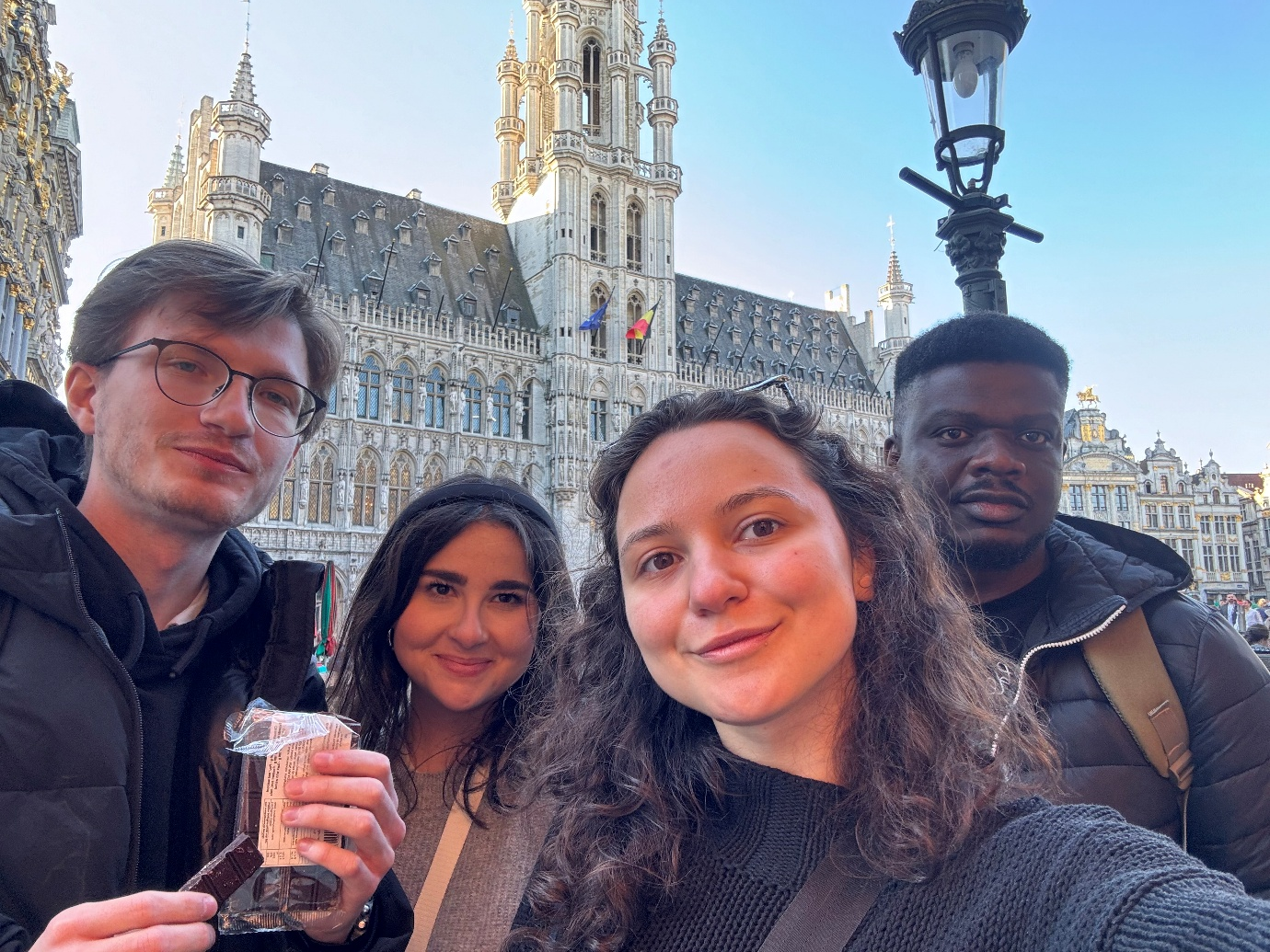
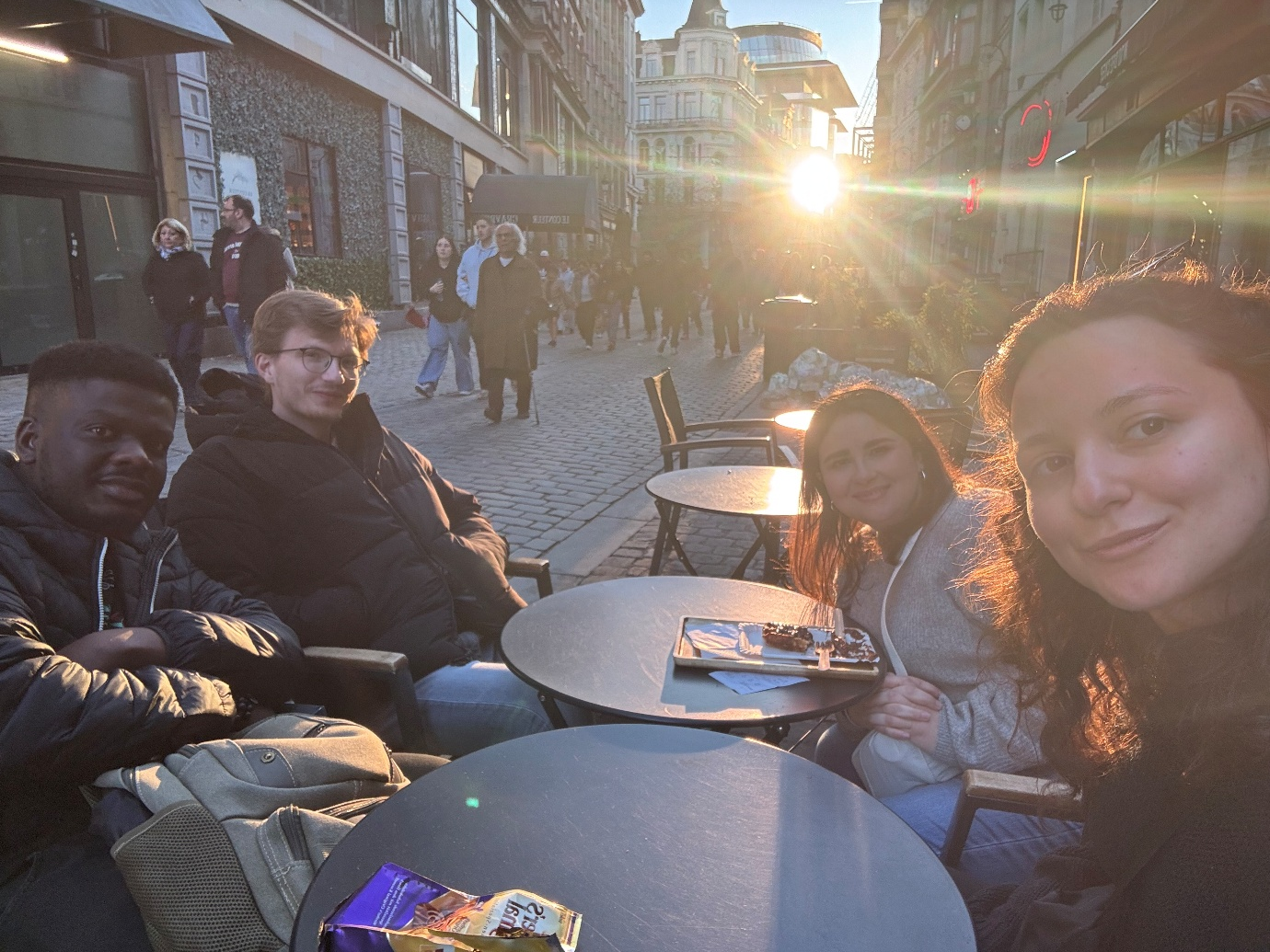
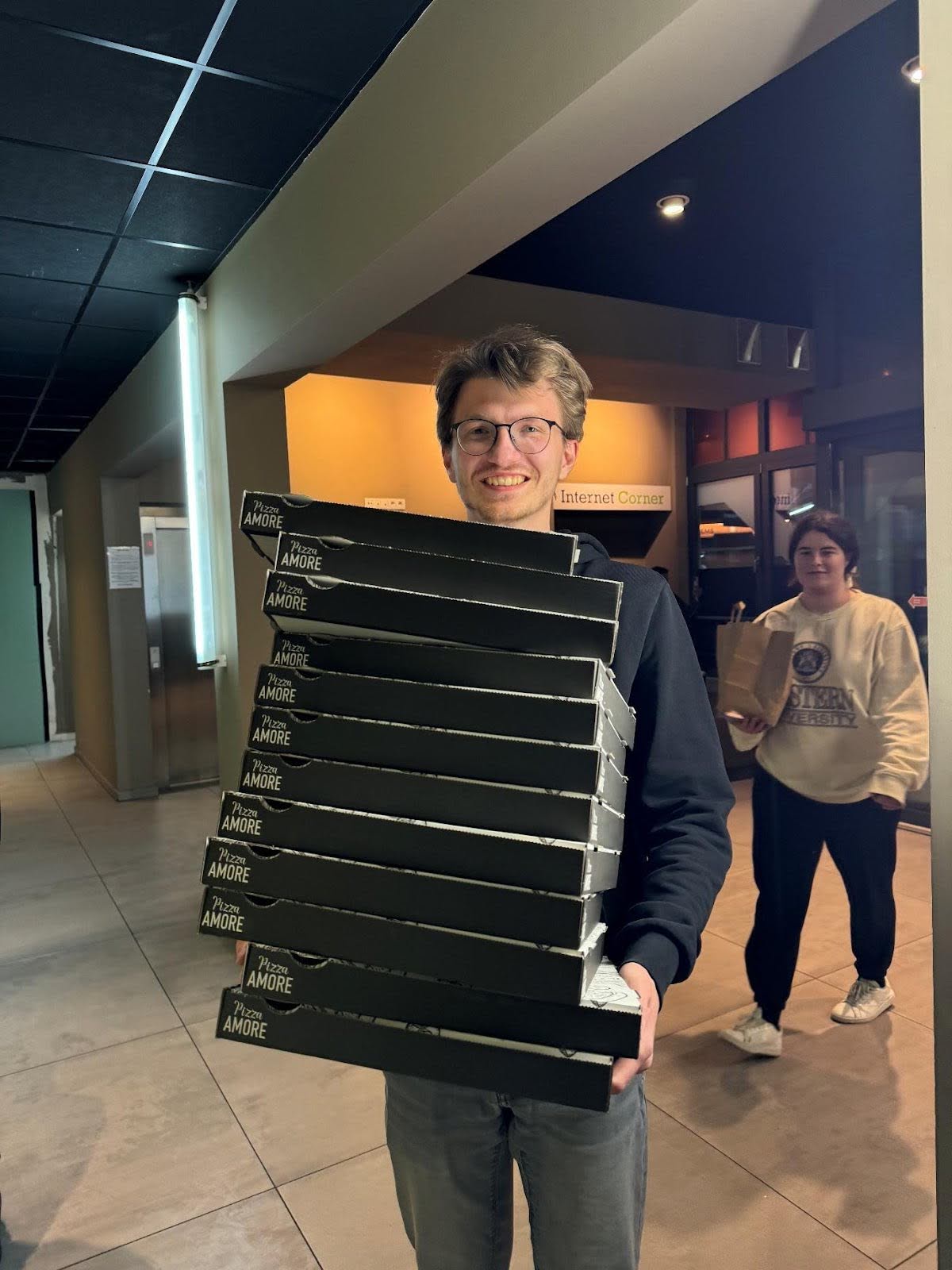
Then came the infamous Pizza Wahala, our very own Euroculture Groningen 2025 pizza scandal. By the way, wahala is a Nigerianism meaning “trouble” and for sure this was a close encounter of the bread kind we did not see coming.” (sorry Steven Spielberg for butchering this). Picture this: 12 hungry students, overwhelmed online pizza places declining us over and over again, multiple languages spoken, zero clarity. Chaos, pure and greasy. Let’s just say, not all heroes wear aprons. However, we succeeded and, boy, was that average-looking pizza yummy to our hungry taste buds. Might as well have been Michelin Star quality.
Movie Night: Beats, Borders, and Balaclavas
Elly brought cords, a projector, and speakers. The hero we needed. Seriously, shout out to Elly, our honorary coordination team member.
We split into two rooms to watch two films loosely centred on borders (Goodbye Lenin and Kneecap). My group watched Kneecap, a gritty, unfiltered take on Irish identity, hip-hop, and post-Troubles resistance. Think balaclavas, bars, and Belfast.
It hit hard. Hilarious and haunting. Echoes of African-American resistance. Rhythms of postcolonial defiance. Generational trauma turned into something loud, absurd, and profoundly human. I saw myself in that story, not literally, but emotionally.
Then, I slept. Both exhausted and extremely moved.
April 8: Brussels Smiled (Briefly)
On this beautiful day, Woyengi blessed us with sunlight. It was a full day ahead, so we marched, or rather staggered, to breakfast at La Cappuccino, which, by the way, comes highly recommended (not a promo). Just close your eyes and imagine Coffee that slaps and bread that hugs.
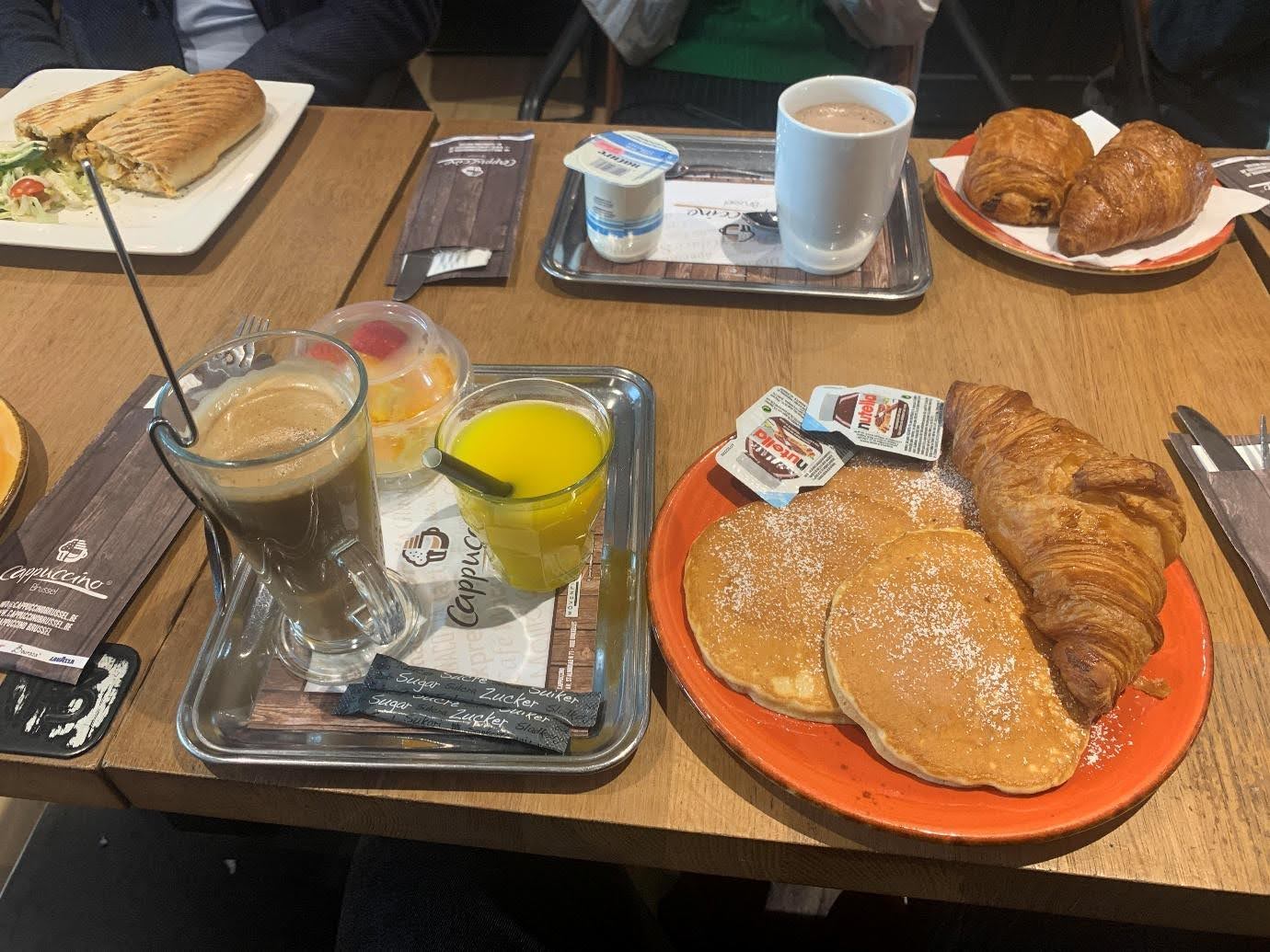
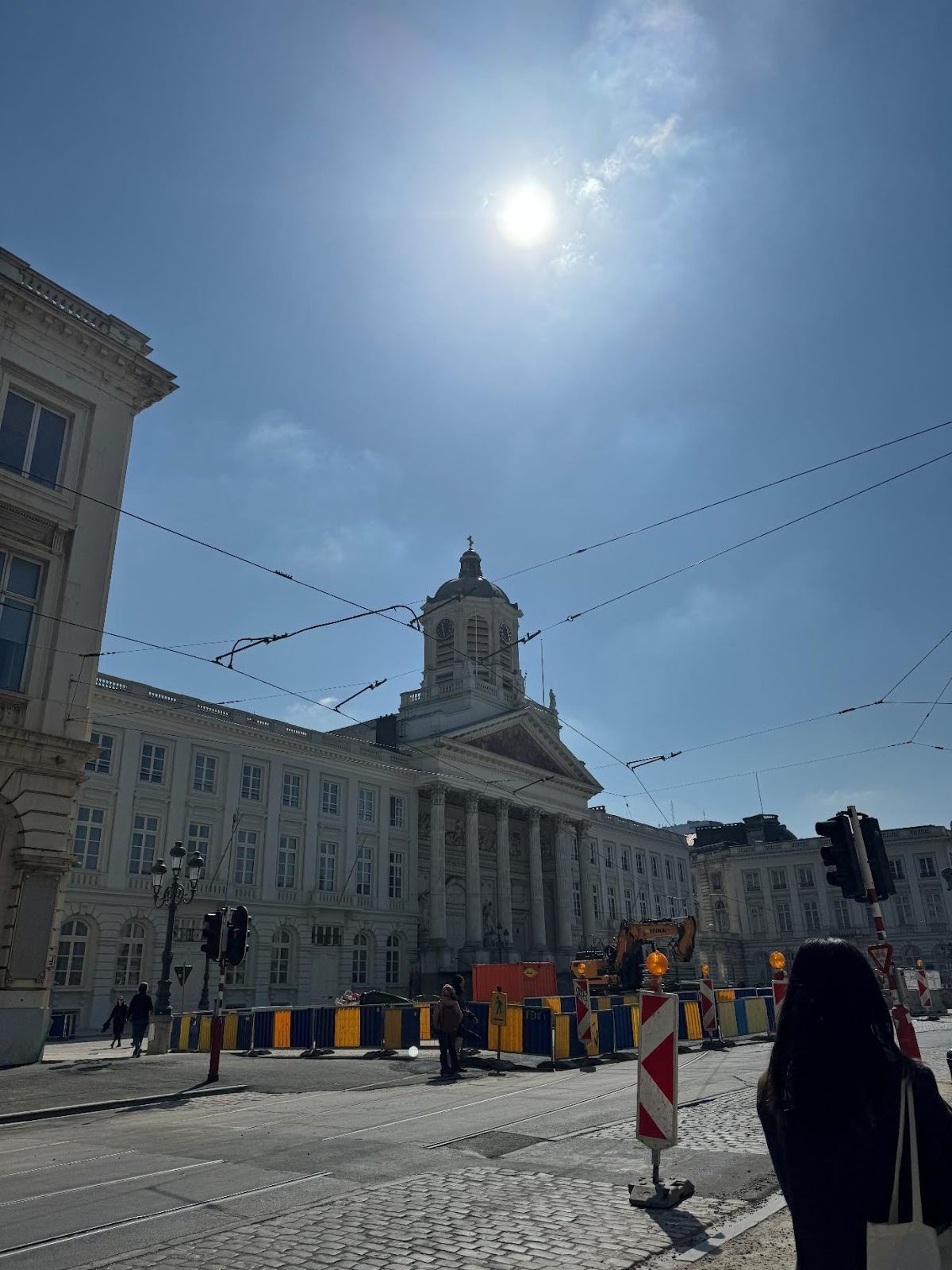
On the way there, I had time to watch the streets. It occurred to me that Brussels is indeed truly layered. The Stalingrad area in particular is full of construction, noise, migration, and life. There is a vibrancy to it that reminded me of Port Harcourt, my home town. It was chaotic comfort and a warm embrace from home (or perhaps a strong case of undiagnosed stockholms with hints of masochism: poor soul, I have become inured to the absurd and normalized it). Anyway, segregation was visible, because as I came to observe, some other parts of Brussels were whiter, with cleaner boulevards on one end; while the browner or more mixed sides like Stalingrad, were, louder, dirtier, with non-ending construction, and broken sidewalks (signs of neglect) on the other. Not imaginary. Not accidental. Just unspoken policy in spatial form.
Also, hilariously, there was the occasional white tourist, their anxiety palpable, masked by nervous smiles. That expression was all too familiar, the “please don’t rob me” smile I often encountered in Cape Town during my undergrad.
Migration Policy Group: My Intellectual Highlight
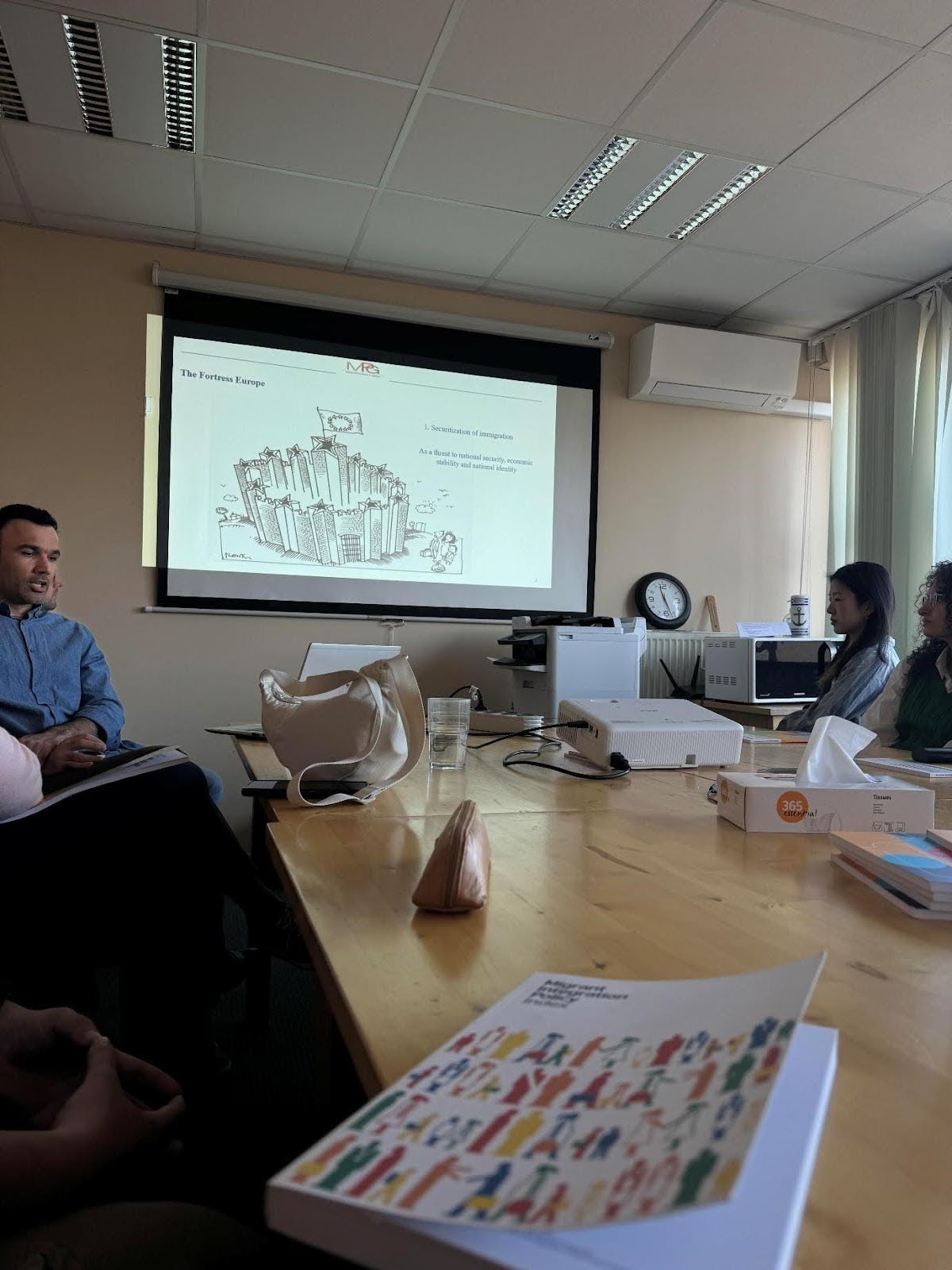
At the Migration Policy Group, we were welcomed by exceptionally brilliant minds and warm hearts. They spoke frankly about Fortress Europe, integration, and mobility. We spoke back. It felt less like a lecture, and more like a serious conversation between equals. For once, everyone was fully present. We were learning. Euroculture Banzaiii!!!
🇪🇺 European Parliament: Grandeur and Questions
Security checks. Guided tours. Sudden imposter syndrome. The halls are designed to impress (and intimidate lol), and they do.

We met MEP Jeroen Lenaers (CDA, Netherlands). Vice-Chair of the EPP Group.
We met Jeroen Lenaers, a member of the European Parliament representing the Netherlands’ Christen Democratisch Appèl and Vice-Chair of the European People’s Party. While I may not agree with most of his political stance, I appreciated his openness and willingness to engage in dialogue, welcoming constructive criticism. His demeanour exuded respect, though a clear hierarchy was evident in his posture, sitting position and control of the conversation. He articulated arguments on internal security and migration policy, emphasizing that for the European dream of unity to materialize, internal borders must remain open. However, he posited that this necessitates robust external borders, enabling Europe to regulate migration flows and provide member states with the assurance they seek. In sum, he spoke openly. The sum of his argument? That internal EU openness requires external strictness.
To paraphrase from what I vaguely remember (thanks ADHD): to have a borderless Europe inside, you need a fortress outside. That logic was elegantly put and troubling. It raised the question: Who gets to move freely, and who remains outside the gates? And is it really mutually exclusive as he puts it? Can’t they both exist at the same time (mutually inclusive) and must one be predicated on the other?
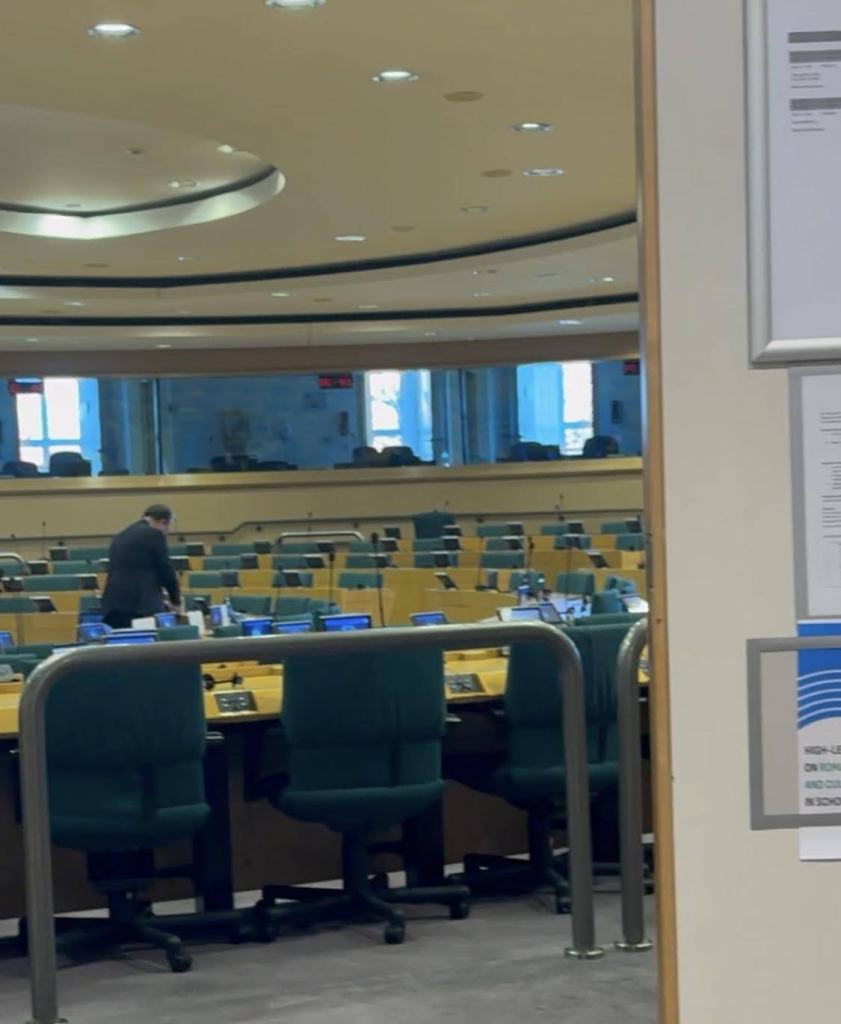
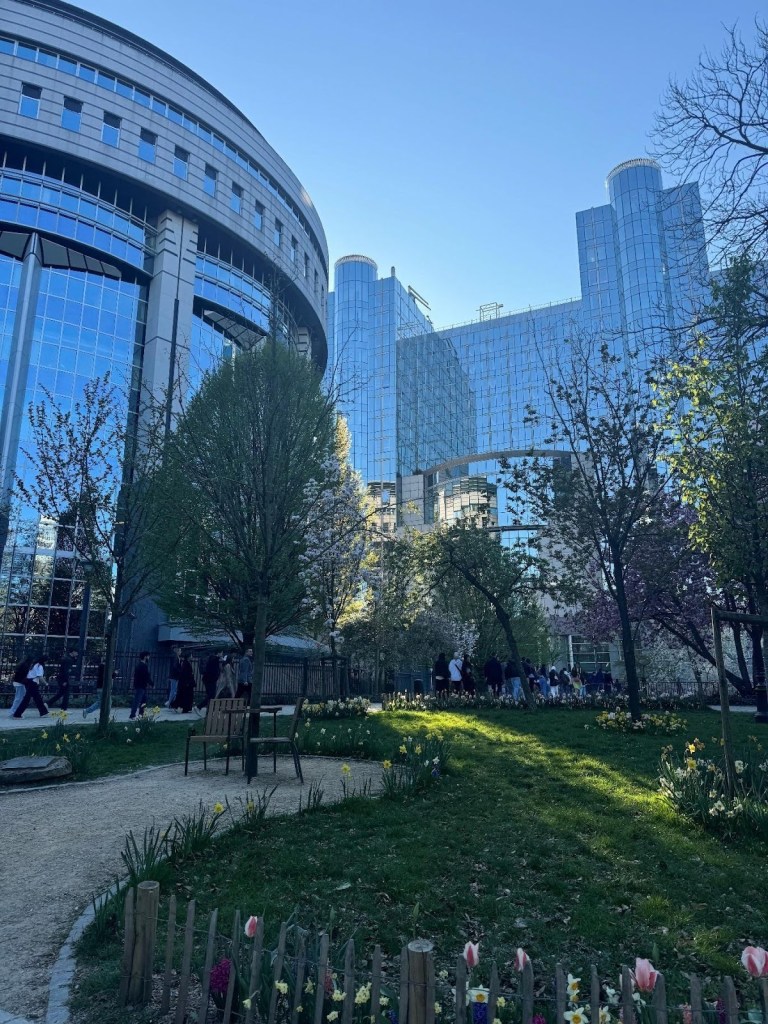
Photo Credit: Maria-Raluca Entuc
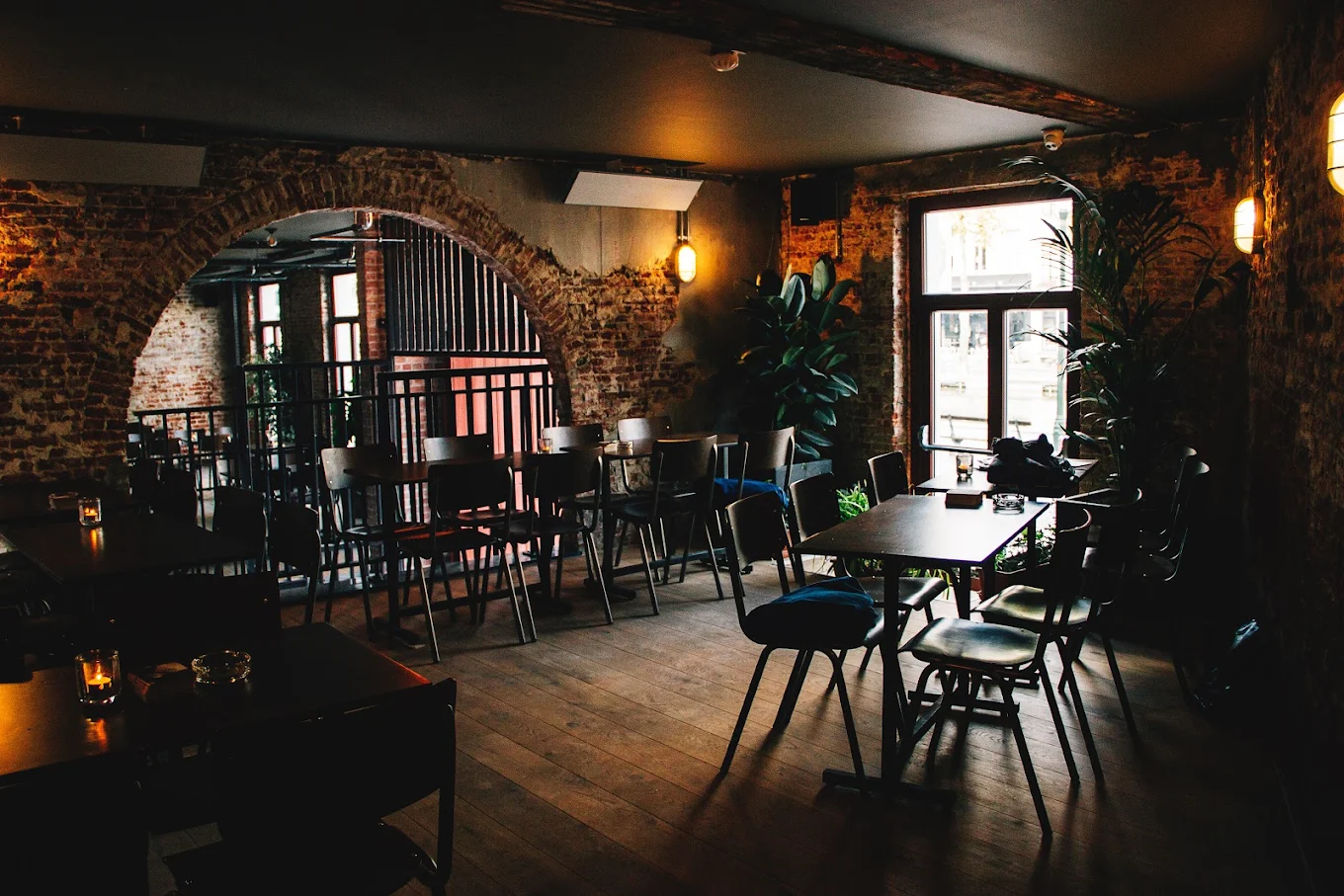
Alumni Dinner at Au Bassin
Easily one of my favourite moments. The drinks were cheap, the vibe was rich, and the conversation? Golden.
I had some dry sour concoction I surprisingly cannot name/recall, but I remember the feeling. It was a very unique drink and made me feel alive?
We mingled with alumni from different generations: pandemic grads, techies, bureaucrats, startup founders. The diversity of paths stunned me. As a non-European, I am well aware of the weight of structural barriers, but in that room, they felt just a little less heavy. If you were wondering what I meant by this, I meant, as a non-European, I am acutely aware of the weight of structural barriers such as residency permits, limited job quotas, even ‘silent’ quotas, but in that room, surrounded by people who had once sat in the same lectures, undergone similar struggles and somehow carved out paths for themselves, they felt momentarily lighter. Still, I could not help but notice the quiet absence of those who looked like me, had my passport or unique life’s experiences. I believe representation matters, not as tokenism, but as a mirror, as proof that the implied ‘European and beyond’ in our programme’s Global Context title is not just poetic decoration or some fancy catchphrase. Consequently, I left that night hopeful, but with questions.
April 9: Heritage, Humans, and Hallways
That morning, everything was chaotic. Oversleeping. Broken luggage. We forgot breakfast. Classic!
Anyway, Europa Nostra came next. Antigoni Michael and Jimmy Jamar were spectacular. They spoke of endangered sites, languages, and living memory. For me my head was buzzing, I was thinking of heritage as resistance. Not preservation for nostalgia’s sake, but as an act of political clarity/resistance.
The activist in me was stirred up, envisioning applications of these insights back home in Nigeria and across Africa. We learned about their collaborations, organizational history, and human rights issues, including a colleague wrongfully detained by the Erdogan government. Antigone Michael spoke passionately about the “7 Most Endangered” programme.
Then came, consecutively, our meetings with the European Economic and Social Committee, (EESC) and the European Committee of the Regions (CoR). It mostly seemed like a blur but the way I can paint it is: there were more acronyms, unique insights and more depth (diving) into the topic of borders from an EU institutional perspective. We discussed child trafficking, cross-border policy, and how local voices shape EU policy.
I left with my head spinning and a heart oddly full.
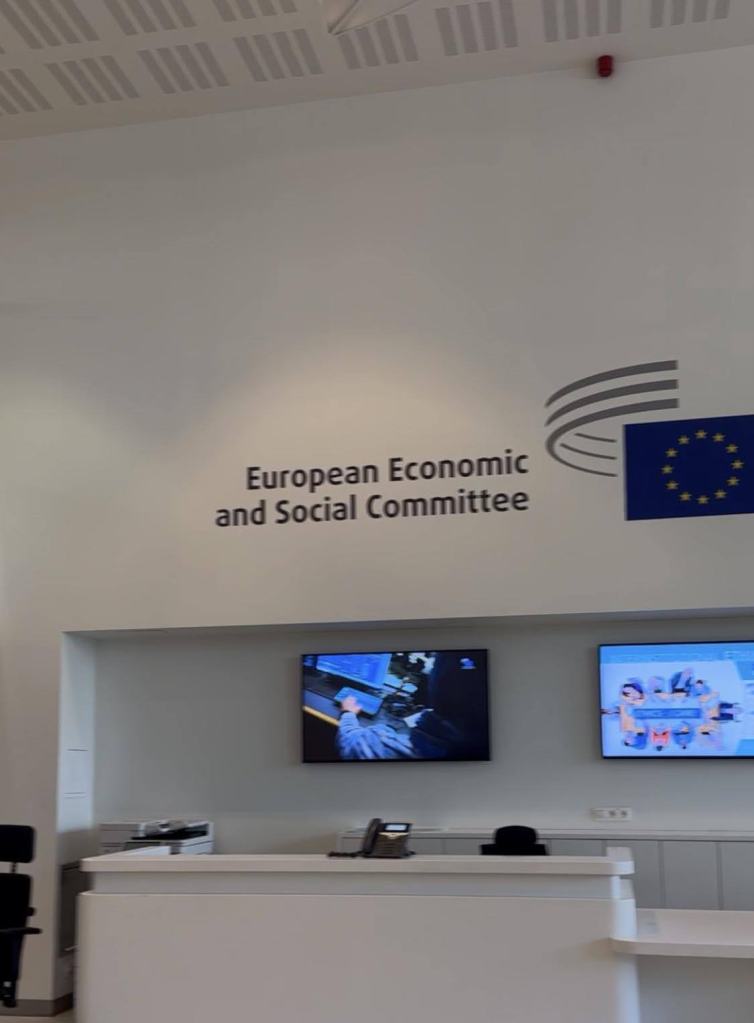
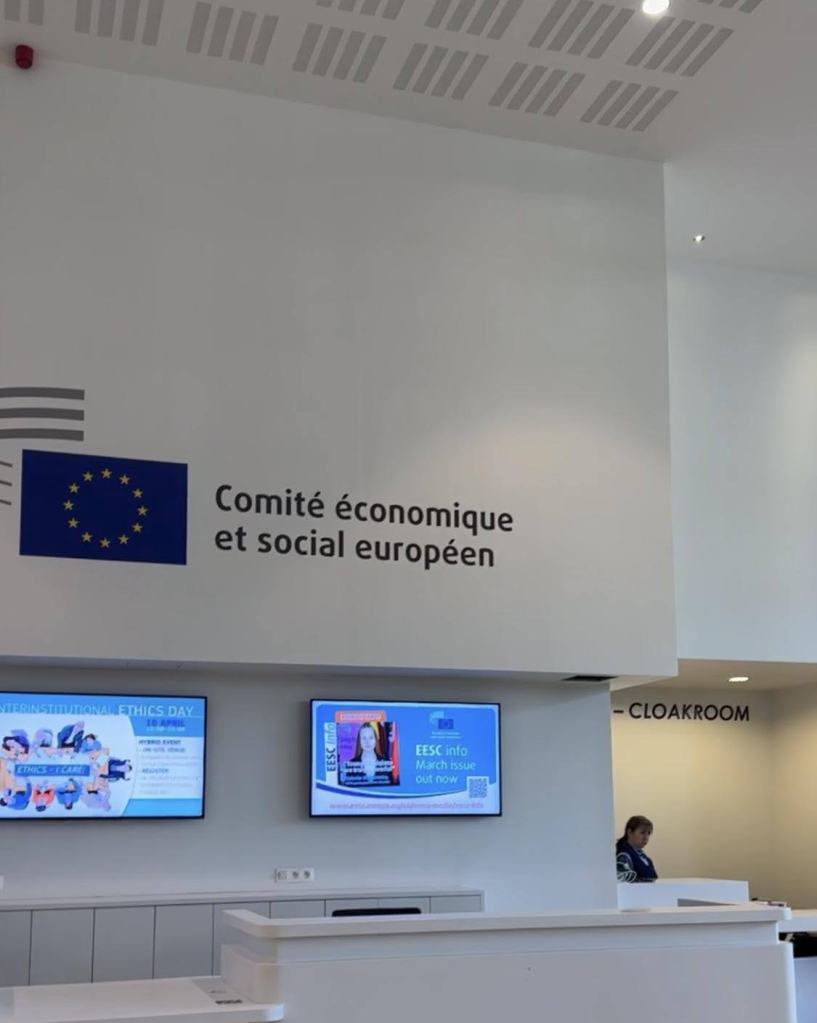
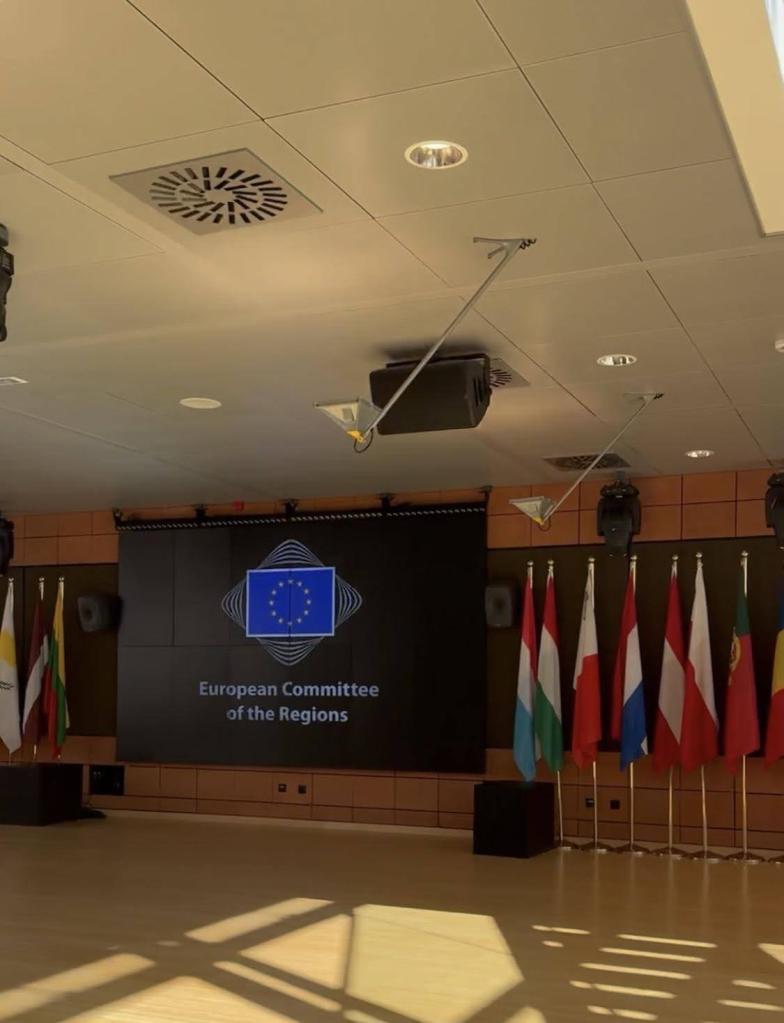
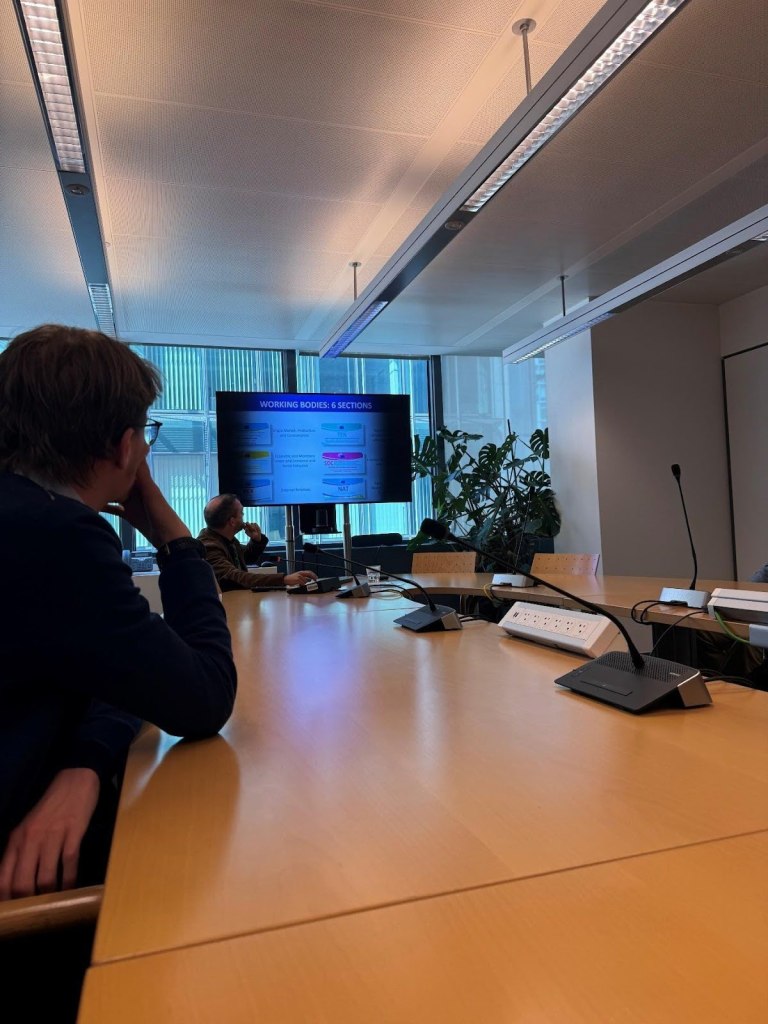
Photo Credit: Maria-Raluca Entuc
Park Pause and Accidental Alcohol
We split groups. Some went to the BELvue Museum. I did not and thank God I did not, quite the whitewashed narrative of colonialism, slavery and its horrors (based on feedback I got from peers). Anyway, I needed sun, silence, and coffee (Yihang, Elly and Maria seemed to agree).
We found a hipster looking café, ordered some badass coffee and proceeded to the park not so far from the Belvue (Parc de Bruxelles) with too many plants and just enough irony. We laughed, shared stories, and sat on the grass.
This breather allowed me to contemplate the trip’s highs and lows, upcoming classes, and future steps (oh the dread).
As our colleagues returned, we visited grocery shops to procure essentials for our journey back to Groningen, anticipating a post-midnight arrival. A humorous incident ensued when I mistakenly purchased a drink, I bought what I thought was a Pepsi, drank it, and realized too late, it was something else. A suspicious cola-shaped bottle of regret.My brain connected colour to brand. For sure, lesson learned: labels lie. It underscored how packaging and branding influence our perceptions, with certain colours and shapes triggering specific associations in our minds (I think I read a study on this). Or perhaps my alcoholic genes were calling and I mistook alcohol for Pepsi (the spirit of the Ijaw and many other stereotypes about Niger Deltans in Nigeria 101).
The Journey Home
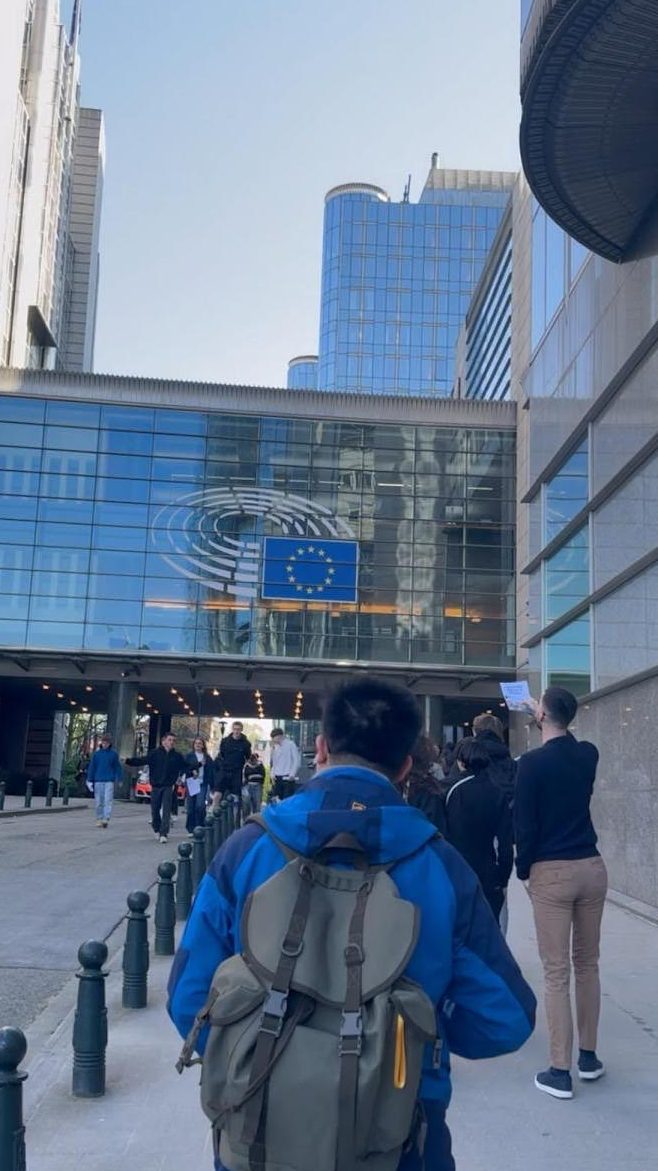
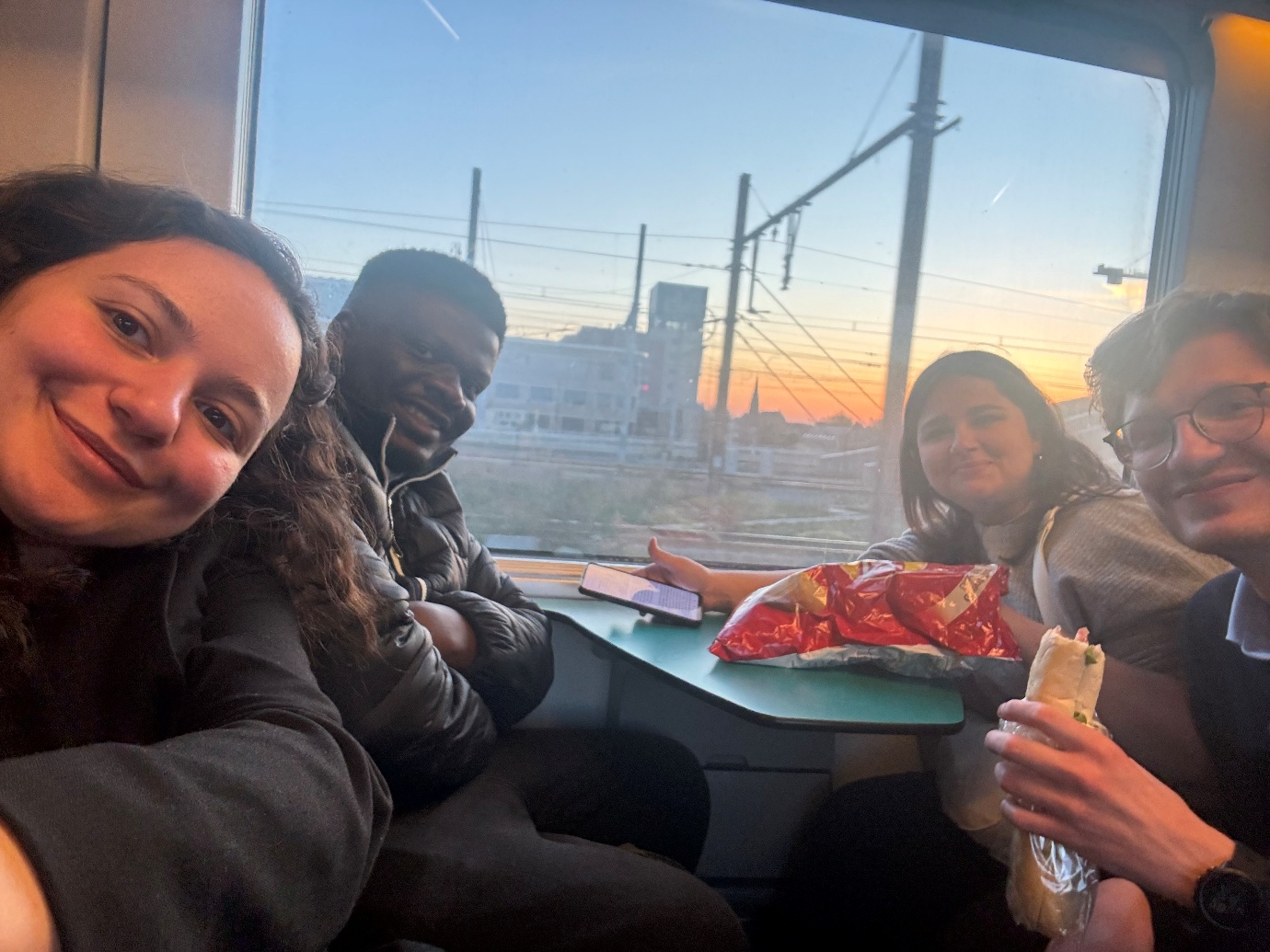
Photo Credit: Maria-Raluca Entuc
Groceries. Hostel. Train (in that order). At midnight, as we approached Groningen, we sang a birthday song to Yihang in the train corridor before alighting. Somehow, we made it back to Groningen past midnight. Then we (Maria, Yihang and myself- the so called Bus Gang) sprinted in the freezing wind to catch the last bus… for a moment I felt like I was the flash, the way I ran cartoonishly, my legs almost left the rest of my body behind; only for the driver to sit and wait an extra 5 minutes. Peak Mockery. Anyway, there was wheezing, a palpitating heart and heavy breathing. Hot tears of embarrassment for this Usain (not) Bolt on a cold Groningen night.
So… Did We Overcome Borders in Brussels?
I am not sure. But we felt them.
In the silence after a question. at the NGOs, in the Parliament, at the EESC. In the pauses where people chose their words carefully or didn’t. In metro cars where our bodies pressed too close, and no one dared meet a stranger’s eye. On café benches where the air was just warm enough to stretch the conversation a little longer and in the unexpected that happened.

We crossed them during scavenger hunts, queued past them for fries, and watched them blur on movie screens. We held them in our hands, in booklets, in MOBIB cards, in hotel room keys-cards. We passed jokes through them. And sometimes, we just sat beside them in silence.
Maybe we understand borders better now. Maybe not.
But we named them. Sat with them. Challenged them in meetings, in WhatsApp threads, in sleepy train rides and hallway whispers. And surely, that must count for something.
Maybe, just maybe, that’s enough.
(Even if the IP graders are already sharpening their red pens (you must temper justice with mercy, my lords) Ha ha.)
Photo Credit: Dannielle Hernandez (header)
 The Euroculturer
Wonderful 😹☺️
Loved Woyengi’s special appearance 😹😏