
by Elidad Addo
Abstract
In the wake of the Russia-Ukraine war, the Ukrainian government has adopted proxy strategies to gain leverage over Russian troops by providing technical support to rebel and terrorist groups attacking Russian military and mercenaries abroad. This tactic is especially evident in regions where Russia is exploiting resources to fund the war with Ukraine.
In our latest article, Elidad shares his insights on the impact of Ukraine’s proxy strategy, particularly in the Sahel region of Africa, where Wagner troops are stationed. He explores the potential benefits for Ukraine in undermining Russia’s financial resources but raises concerns about the escalating conflict in the Sahel, which may become a victim of the Kyiv-Moscow rivalry.
For anyone interested in the geopolitical dynamics of the gold and uranium-rich Sahel region and the broader implications of proxy warfare, this article is a must-read.
Introduction: Ukraine- sponsored attack on Wagner in Mali
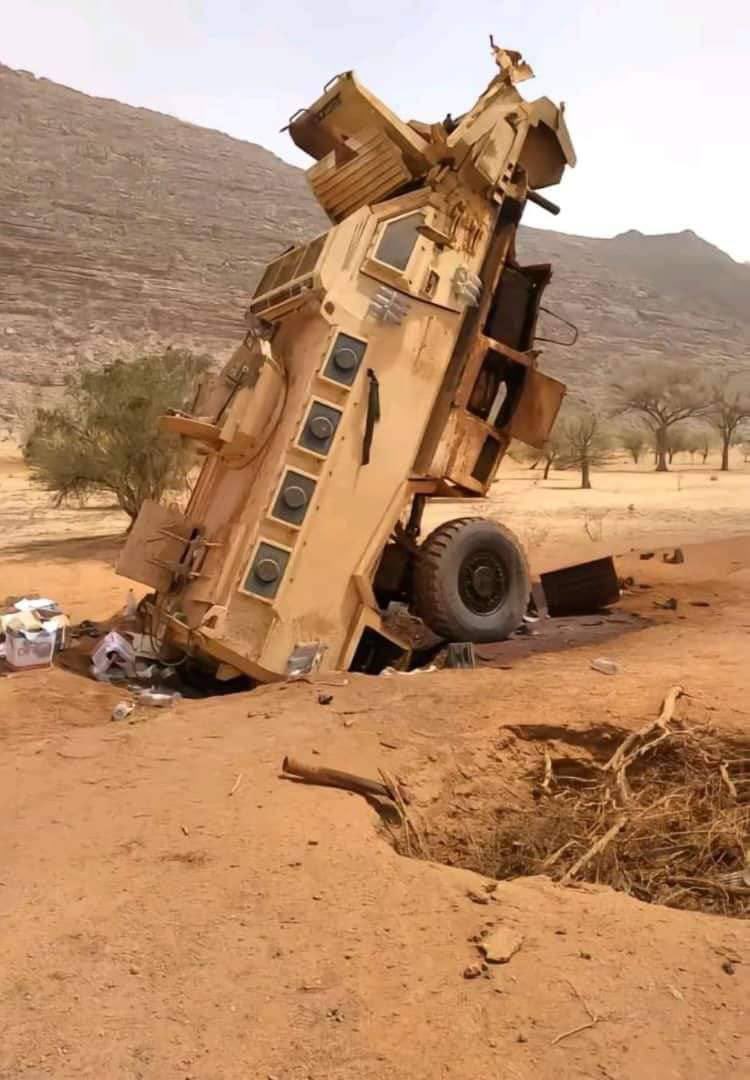
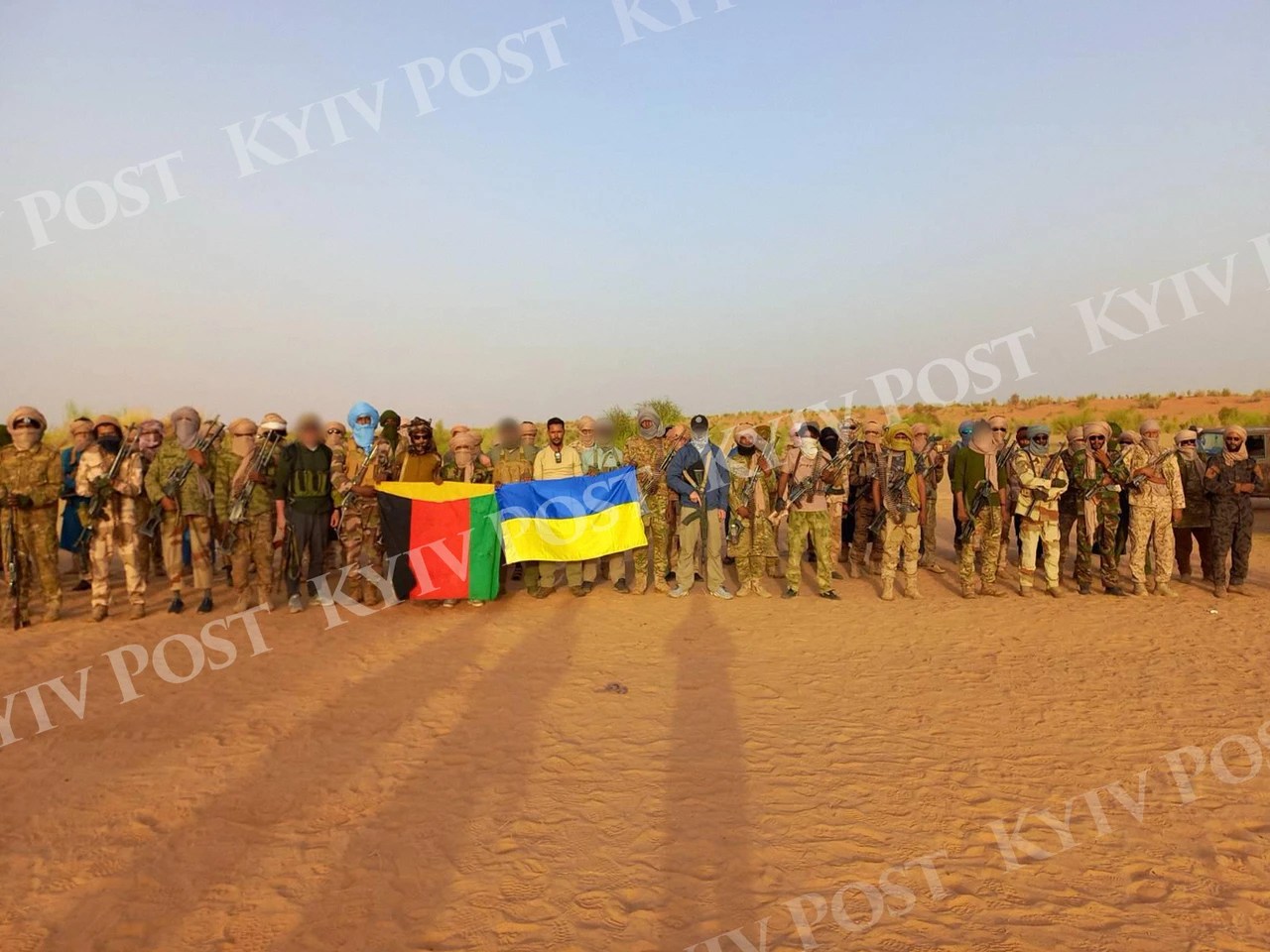
On 29th July 2024, new articles surfaced on the internet displaying the defeat of Malian forces, along with their Russian government-backed Wagner military group, by the Tuareg separatist rebels of Northern Mali. These rebels have been a security threat to the Malian government since 2012, after declaring independence from Mali. The attack on the Malian government-backed military groups lasted several days and resulted in the death of 84 Wagner mercenaries and 47 Malian soldiers, with others taken as prisoners, according to the separatist rebels. The nature of the attack and the victory of the Tuareg separatist rebels suggested they may have received external support from Ukraine. This was later confirmed by Ukrainian intelligence and evidenced in a group photo made public, which revealed the Ukrainian flag held together with the Azawad flag by the Tuareg separatist rebels.
This move by the Ukrainian government, now supporting the Tuareg separatist rebels who are said to have links to the Al Qaeda terrorist group, poses a threat to West African regional security. By acting against the Malian government and its Russian ally to retaliate for the Russian invasion into Ukraine, Ukraine compounds the regional insecurity challenges in West Africa. Civilians become the victims of the socio-economic impacts of prolonged conflicts, a reality best explained by an African proverb: “When elephants fight, it is the grass that suffers.”
Is East- West rivalry in Africa new?
Ukraine, which has the backing of the West against Russia and its East allies, extending the battlefield from Europe to Africa, only weakens the security threat on the continent as well as the economic development of the war-zone areas. This incident of Africa being the battleground for East-West rivalry is not novel in the political history of many African states. During and after the Cold War, many nationalist leaders in Sub-Saharan Africa who were pro-East had their governments overthrown in military coups that were either sponsored or supported by Western intelligence. Political-economic positioning of African leaders, which started as a battle of ideologies, has fueled several military operations seen in numerous coups in Africa.
The most notable Western-sponsored military operation against a nationalist leader in Africa in recent history was the ousting of Muammar Gaddafi in Libya, which turned the once oil-rich socialist state into a den of militia groups fighting each other and breeding grounds for Islamic extremism, a situation likely never to be restored under a single government because of the backing of militia groups by different sides of the East-West bloc. Over the years, the West had gained significant influence in several Sub-Saharan African countries until China began to dominate and became the go-to economic and developmental partner for many African states. The East-West rivalry heightened when the Sahel states, after a longstanding relationship with France , decided to replace them with Russia, weakening the West’s power in the subregion.
Track record of Military support from Global North countries
Most of these military support and operations in conflict zones in Africa by the US, EU, UAE, Russia, Iran, and China have all been about self-centered economic and political interests, not because they genuinely want to find a lasting solution to the root cause of the conflict. These interventions and the support received by conflicting parties in Africa turn the region into the battleground for opposing economic and political blocs, which prolongs the conflicts, leads to the exploitation of resources in the region, and impoverishes the citizens. Mali, Burkina Faso and Niger with the invitation of Russian military support in the wake of the Russian-Ukraine war, would likely face a similar fate of being a casualty of the East-West power struggle if steps are not taken to reduce Russia’s involvement in their fight against insurgency and counter-terrorism in the Sahel.
Since the start of the Russia-Ukraine war, the West African subregion has been battling with the war’s negetive impact on food security and food inflation. The Sahel states’ secession from The Economic Community of West African States (ECOWAS) due to the increased Western influence that opposed the military coup in Niger, along with Russia’s support in the Sahel, has also weakened the regional body, heightening mistrust and posing a risk to the collective fight against terrorism, regional peace, and economic integration of West Africa. Allowing the region to be a proxy in the Russia-Ukraine war would worsen the security, economic, and social stability of the region.
Mali’s response to Ukraine and the likely turn of events
The Malian government has cut diplomatic relations with Ukraine, calling the support to the Tuareg separatist rebels an attack on their sovereignty. This move by the Malian government is likely to be followed by their Sahel allies, namely Burkina Faso and Niger, who all have strong ties with Russia, providing military assistance to combat insurgencies and terrorism in the Sahel. If Ukraine continues its support to various rebel and terrorist groups in the Sahel region, as it is doing in Syria, against the government-backed Russian troops, there is likely to be an escalation of the conflict and increased terror attacks in the Sahel region. The one who benefits from such a situation is the Russian government, whose continued presence in the Sahel gives them access to gold, uranium, and other strategic minerals in the region in exchange for military support. This comes at the expense of the region’s security, economic development, and the lives of civilians who may become collateral damage. In the end, it is Africa that loses, becoming a victim of the Kyiv-Moscow rivalry, not the East nor the West.
 The Euroculturer