
by Wiebke Stedler
Introduction
Social media has become a key factor in elections across the globe. They have come to stay and to revolutionize the way political campaigns work forever. Over the past decade, they have arisen like an impactful, almost almighty power with the potential to lastingly shape how people vote. The still-ongoing 2024 has distinguished itself as the “biggest election year in history,” with elections taking place in at least 64 countries from Algeria to Bangladesh, to Chile. Let’s thus take a closer look at how the political potential of social media has been unfolding in current elections worldwide. Indignity is taking over fear that at least European stakeholders have underestimated and ignored far-right movements for too long. Yet, the narrative that only the far-right are capable of employing social media to maximize their outreach is a particular European problem as this article reveals. Political campaigns on social media tell us a lot about a party’s campaigning strategies, voter demographics, and the general state of information freedom in the respective country. So let’s take a look at different countries in Europe, Asia and Latin America.
Poland
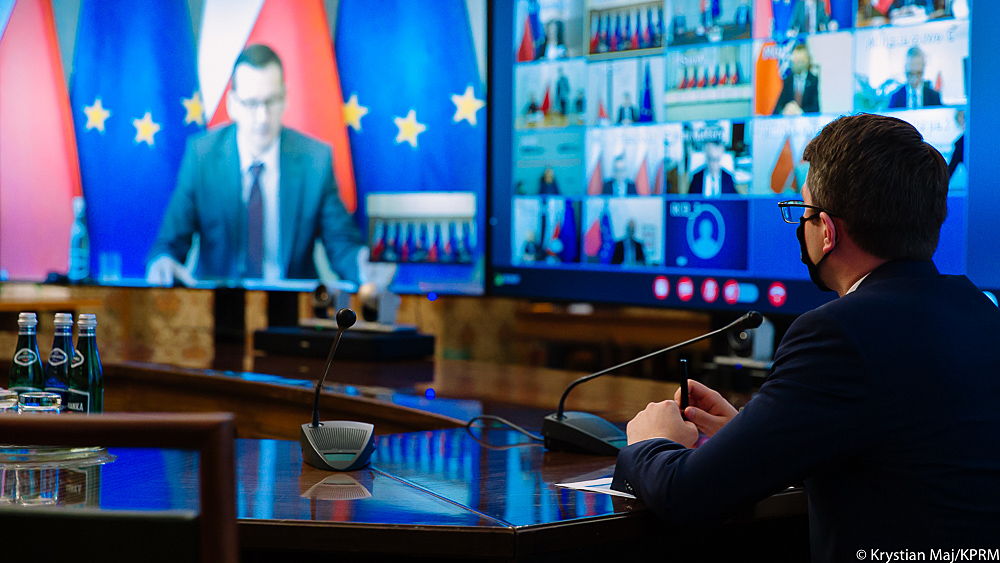
The different facets of social media already became apparent before the mega-election year of 2024. The parliamentary elections in Poland on October 15th, 2023, were a prime example to reveal its campaigning power. The results ended the rule of the conservative PiS party which had come to power in 2015. While campaigning in 2023, the PiS, alongside the opposing coalition Koalicja Obywatelska (KO) led by Donald Tusk, switched from X to Facebook as their main social media platform to reach certain voter groups. Social media turned into a major campaigning site for both the PiS as well as opposing parties, especially given the strong influence that the government had forced on traditional news outlets in previous years.
The KO mainly targeted new and young voters, while the PiS relied on older citizens’ votes. Younger voters, are also present on Facebook, as they use it as a main messenger application. PiS chose Facebook as a major platform for their campaigns to reach potentially older voters as they use it mainly as a news source to inform themselves. In the social media realm, PiS could arguably count on a stronger presence and established trolling tactics against its opposition, such as setting up fake websites. Yet, the leftist opposition spent more on social media campaigns than PiS, and was able to especially persuade young voters to vote, leading to the highest voting turnout since the end of the communist rule. Focussing on current crisis issues that arose during the PiS government and a coordination of the social media campaign within the KO coalition contributed substantially to their victory. These elections are a prime example of how a campaign and platform tailored to a specific group of voters can help a party acquire political victory.
Bangladesh
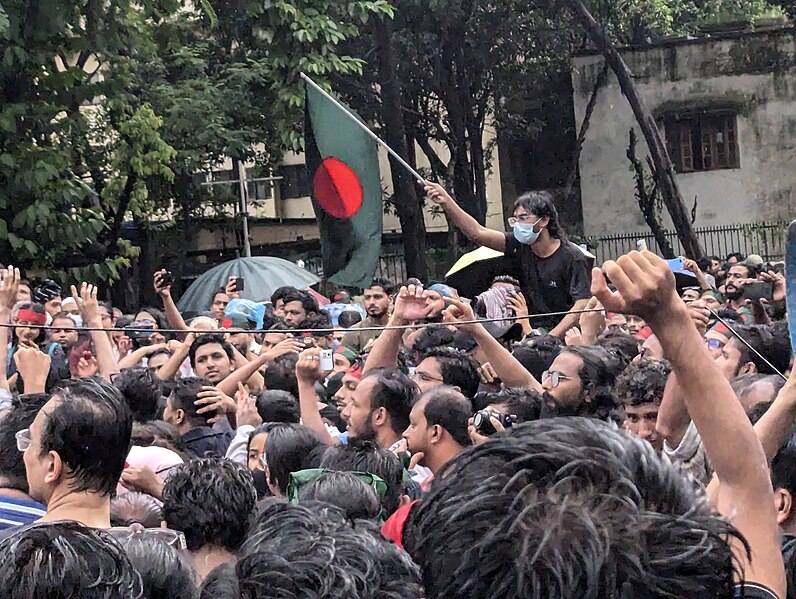
In Bangladesh, on the other hand, social media is a powerful tool for the opposition to counter oppressive legal acts imposed by the government. General elections in Bangladesh took place on January 7th, 2024. As the ruling Awami League heavily advanced its intimidation of political opponents, social media became the main battleground for political discussions. Around 50 million people in Bangladesh are social media users and in the months before the 2024 election, for more than 93 percent of them, Facebook was the go-to platform. Here, the ruling party employed the possibilities of digital campaigns to spread their desired narrative hailing its supposed success and progress. In the December before the election alone, the party posted 84 paid posts.
Misinformation on social media had already been heavily circulating during the last elections in 2018. The 2024 campaign added not only misleading political ads but also deepfakes to the mix of the already existing vastness of misleading information on social media. The latter ones especially targeted members of the oppositional Bangladesh Nationalist Party (BNP). According to the “Diplomat” newspaper, deepfakes and other AI technologies seem to attract massive online interactions despite their exaggerated artificiality. Experts stress that not the existence of fake news per se is the biggest challenge but the presentation of facts in a completely distorted context. On election day, BNP activists called for a nationwide boycott of the election on social media due to the existing oppressions which resulted in a conspicuously low voter turnout.
Yet the current political developments in the country are still making headlines in international news media. After a 15-year rule, Sheikh Hasina resigned when protesters stormed her residence on August 5th.
India
Though in direct geographical proximity to Bangladesh, social media in India has distinct dynamics in political campaigns. India’s general elections took place from April 19th until June 1st, and was, as before, a highly challenging logistical undertaking. Approximately 945 million people were eligible to vote in what is considered the largest democratic election process on earth. After all, India is a country of more than 1.4 billion people. Given this immense demographic potential, India’s social media landscape concerning the elections is unique and the overall campaign budget is remarkable. More than 8.7 billion US dollars were spent already at the 2019 elections to attract voters, and the importance of social media for political campaigns has only been increasing.
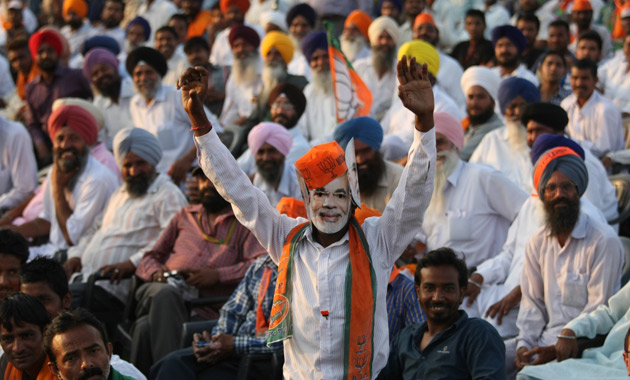
What’s remarkable about campaigning in India is that it combines both in-person rallies as well as communication through social media. Given the vast demographics, in-person rallies remain vital, and the major parties kept allocating a substantial part of their campaign budget to them. Already in 2014, the electoral campaign of Prime Minister Narendra Modi was by some described as “one of the biggest mass mobilization exercises seen anywhere in the history of political campaigns.” To rally the country, Modi hired marketing experts, initiated event management campaigns, and employed technological tools to set up events such as rallies in 3D.
The rallies provided a valuable source for online content. Parties used this “real world evidence” to extend the rallies’ effect, reach not just people present at the rallies, and convince potential voters. This “real world” content was spread through social media networks by party volunteers, the most important platform being WhatsApp. In India, Mobile data is one of the cheapest in the world, and about two-thirds of the population uses smartphones. For many, WhatsApp was the parties’ main channel of communication, and social media generally are of utter importance. Unlike many European societies, 65 % of India’s population is younger than 35, and half a billion Indians use WhatsApp for several hours daily. New potential voters were often targeted through face-to-face conversations with political volunteers which again stressed the importance of rallies. For this purpose, the social media coordinators of the ruling Bharatiya Janata Party (BJP) maintained a huge network that reaches up to 15,000 people a day. For parties with access to smaller funds, WhatsApp was crucial for their campaigns as well since they were not financially capable of setting up rallies of comparable dimensions.
Not all rallies were successful though. One of the recent fails concerns a rally hosted by the INDIA bloc, a multi-party alliance led by the main opposition party Indian National Congress (INC). The conservative English-speaking news outlet Times of India covered the rally stating that alliance partners were openly clashing, threatening each other with canes and throwing chairs. The scene turned into a perfect opportunity for the BJP to point out the incompetence of its main political enemy.
The undeniable importance of messenger services like WhatsApp comes with clear downsides. After the rallies, voters discussed the political content further in private groups. Here, the content and its narrative often became unmanageable and untraceable. Functions such as end-to-end encryption made it impossible to control the spread of fake news. Under such circumstances, political experts such as Sanjay Jha, Indian author, politician, and former national spokesperson for the Indian National Congress (INC), have raised concerns that India could become the place for the biggest disinformation campaign worldwide during election times.
Venezuela
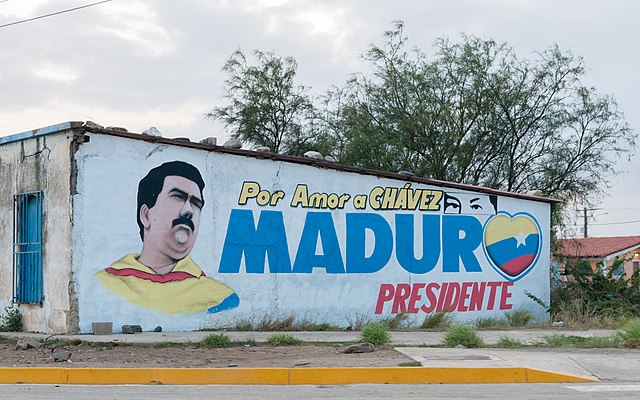
On a contrary note, the past elections in Venezuela have been another prime example of how the barring of social hinders oppositional movements. On July 28th, Venezuelans were called to the election polls to vote for a new president to rule the country for another six years. Many independent election monitors such as AS/COA had indicated a preference of voters for Edmundo González Urrutia, leader of the main opposition coalition Democratic Unitary Platform, prior to the election. However, a day later, the Electoral Council of Venezuela (CNE) declared leftist officeholder Nicolás Maduro as the clear winner – a result doubted by experts due to its statistical implausibility. Media outlets worldwide speak of a continuation of historical electoral fraud in Venezuela, this time committed by Maduro to secure his power.
To ensure that the results would turn out as desired by the leftist dictator, Maduro attempted to curtail the main communication channel connecting the opposition around the political leadership of Maria Corina Machado with potential voters. Less than a week after the elections, civil rights associations and human rights defenders lamented the suppression of free speech in the country with digital tools. Cases of internet censorship spiked. VenApp, a government-owned messenger service, was used to collect reports concerning the opposition and to track down opponents. Allegedly, 62 media outlets were blocked, and major internet service providers were cut off. An action with vast consequences for freedom of information, given that news coverage about and initiated by the opposition depends heavily on independent news outlets, and social media platforms like X, Facebook, Instagram, Youtube, and WhatsApp. Yet, despite their importance, also in Venezuela, social media is a breeding ground for fake news, and the provided information often lacks the necessary context. On a more rudimentary level, internet connections are slow and pricey, and recurring power outages turn information-seeking into an often impossible endeavor.
Yet, even after the end of the elections, Maduro’s fight against social media is not subsiding. Less than two weeks after the elections, he announced the blocking of the platform X for ten days. The restriction results from a feud between Maduro and X CEO Elon Musk who openly posted his disapproval about Maduro’s re-election on the former Twitter platform.
What’s to come for the future of political campaigns?
The here-presented examples of strategies undeniably prove that social media has come to stay throughout electoral campaigns worldwide. In European countries like Poland, though press freedom is not guaranteed, it is less of a concerning issue. Thus, some parties use social media as a laboratory to target specific voter groups via certain platforms and campaigns. In other less democratic countries, however, social media has become a battleground for oppositional forces to defend democratic efforts. Even when comparing countries in highly diverse regions across the globe, it is evident that social media incorporates fake news as well as artificial intelligence elements that, if not tackled by media literacy campaigns in the future, can turn into a universal threat to democracy.
 The Euroculturer

